

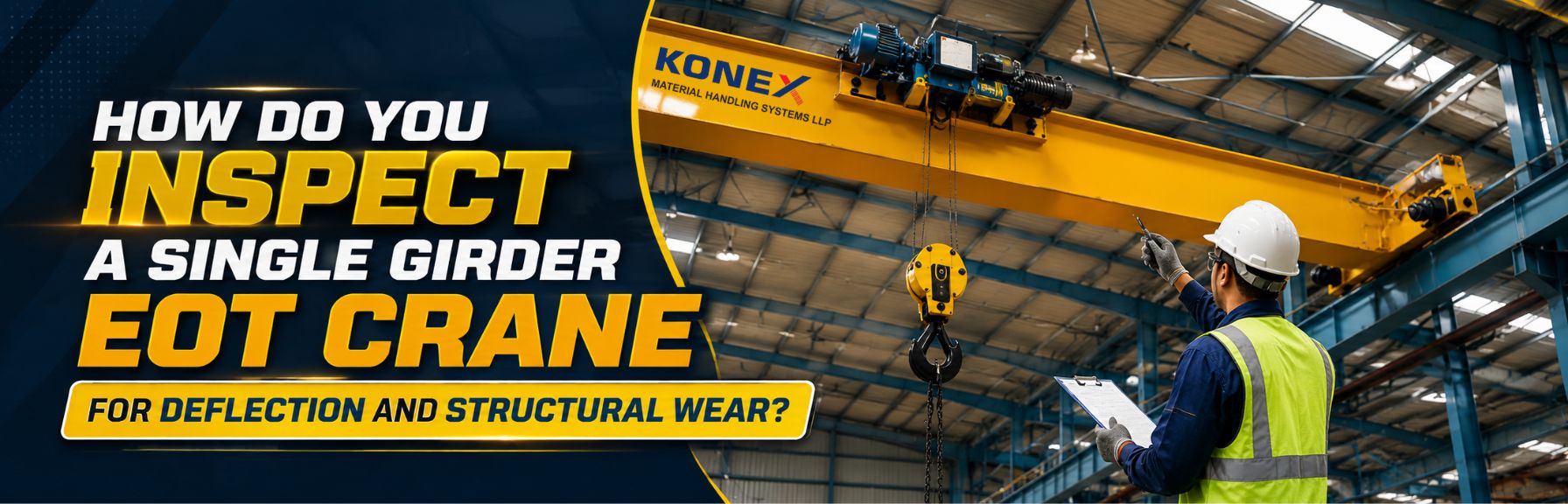
How Do You Inspect a Single Girder EOT Crane for Deflection and Structural Wear?
In any busy manufacturing facility, warehouse, or industrial assembly line across India and globally, safety and uptime are the cornerstones of profitability. At the heart of these operations, you will often find the workhorse of material handling: the Single Girder EOT Crane.
These overhead cranes keep raw materials moving, production lines feeding, and finished products shipping. However, because they work tirelessly day in and day out under heavy loads, they are naturally subjected to immense physical stress.
Over time, this continuous stress can lead to two major structural concerns: deflection (temporary or permanent bending) and structural wear (fatigue, cracks, or misalignment).
If you are a factory owner, plant manager, or maintenance head, knowing how to safely inspect your Single Girder EOT Crane for these signs of wear is essential. It is not just about keeping your facility compliant; it is about preventing catastrophic breakdowns, protecting your workforce, and eliminating unplanned downtime.
In this comprehensive guide, we will break down exactly how to inspect your crane structure safely, identify early warning signs of wear, and understand when it is time to consult a leading EOT Crane Manufacturer like Konex Material Handling System to protect your investments.
Why Regular Inspection of Your Single Girder EOT Crane is Non-Negotiable
It is easy to fall into the “if it isn’t broken, don’t fix it” mindset when operations are running at full speed. But when it comes to overhead lifting equipment, waiting for a failure is an incredibly high-risk strategy.
Regular structural inspections offer several business-critical benefits:
- Uncompromised Workplace Safety: A sudden structural failure can lead to severe accidents. Regular checks keep your operators and floor staff safe.
- Drastic Downtime Reduction: Catching a small structural issue, such as minor joint wear, allows you to plan repairs during scheduled maintenance windows rather than stopping production unexpectedly.
- Maximised Operational Lifespan: A well-maintained crane will perform reliably for decades. Proper care protects your initial capital expenditure.
- Legal and Regulatory Compliance: Industrial safety bodies in India and globally mandate documented, periodic inspections of lifting machinery.
What are Deflection and Structural Wear?
Before we dive into the step-by-step inspection process, let us clarify what we are looking for, without getting bogged down in overly complex engineering terms.
1. Deflection
Think of deflection as the natural “flexing” of the main beam (girder) when the crane lifts a heavy load. Just like a bridge slightly bows when a heavy train passes over, your Single Girder EOT Crane is designed to bend slightly under load and then spring back to its perfectly straight state once the load is set down.
- Normal Deflection: The temporary bowing that disappears once the weight is released.
- Abnormal Deflection: When the beam remains bent or sagged even when there is no load on the hook. This is a serious structural hazard indicating the metal has been stretched past its safe limit.
2. Structural Wear
Structural wear refers to the physical deterioration of the crane’s steel components, joints, and connection points. This includes surface rust, paint peeling (which often hides rust beneath), micro-cracks in the welds, loosened bolts, and misalignment of the wheels running along the tracks.
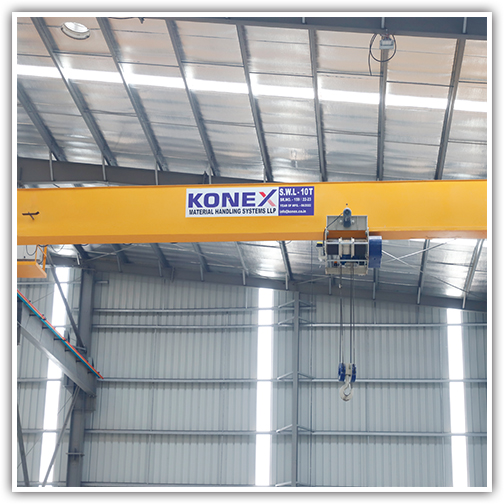
Step-by-Step Guide: Inspecting Your Single Girder EOT Crane
This inspection should be carried out by trained maintenance teams or qualified safety personnel. Always ensure the crane is completely powered off, locked out, and tagged out (LOTO) before any physical or visual inspection begins.
Step 1: The Initial Ground-Level Visual Scan
Before climbing up to the crane runway, start with a thorough visual sweep from the factory floor.
- Look for Sagging: Stand at a distance where you can see the entire span of the main girder. Does it look perfectly straight, or is there a noticeable dip in the middle?
- Listen for Unusual Noises: During a test run before shut-off, did the crane make unusual creaking, grinding, or popping sounds as it traveled along the tracks?
- Observe the Travel Path: Does the crane crab or shudder as it moves down the shop floor? This can point to runway misalignment or uneven wheel wear.
Step 2: Inspecting the Main Girder for Deflection
To check if your Single Girder EOT Crane has suffered permanent bending, you need to measure its straightness when it is completely unloaded.
- Set up a Reference Line: Tighten a wire or use a specialized laser level parallel to the bottom of the main girder from one end to the other.
- Measure the Clearance: Measure the distance between your reference line and the center of the beam.
- Analyze the Results: If the center of the beam sags below the ends when empty, the girder has sustained permanent deflection. This indicates the crane may have been overloaded in the past or has suffered severe fatigue. If you spot this, the crane must be taken out of service immediately for professional assessment.
Step 3: Checking Welds and Joint Connections
The integrity of a crane lies in its joints. The connection points between the main girder and the end carriages (the wheel blocks at the ends) bear massive structural loads.
- Look for Paint Cracks: If paint is chipping, flaking, or cracking specifically around a welded joint, it is a strong indicator that the metal underneath is flexing excessively or cracking.
- Inspect the Welds: Use a clean cloth to wipe away grease and dust. Look closely for tiny hairline fractures along the welded seams.
- Check the Bolts: Ensure all connection bolts are perfectly tight. Rust running down from a bolt head is a classic sign of a loose bolt rubbing against the frame.
Step 4: Examining the Runway and End Trucks
The runway beams (the tracks on which the entire crane moves) and the end trucks (the wheeled carriages at each end of the girder) must be in perfect alignment.
- Wheel Wear: Check the wheels on the end trucks. If one side of a wheel flange is heavily worn or shiny, it means the crane is rubbing hard against one side of the track. This puts immense twisting stress on the main girder.
- Track Straightness: Inspect the joints of the runway rails. Look for loose clips, gaps, or shifts in the rail alignment.
Step 5: Scanning for Corrosion and Environmental Damage
If your factory operates in humid regions, chemical environments, or coastal areas in India, corrosion is a silent threat to steel structures.
- Deep Rust: Surface rust is common, but deep, flaky rust eats away at the thickness of the steel, significantly lowering its carrying capacity.
- Pitting: Look for small pits in the metal surface, especially in hard-to-reach pockets where moisture accumulates.
When to Stop Using Your Crane Immediately
If your maintenance team flags any of the following signs during their inspection, the crane should be locked out of service immediately:
Warning Sign | Potential Danger | Immediate Action Required |
Visible sag in the girder without load | Permanent structural failure | Stop all lifting; contact an expert. |
Cracks in primary welded joints | Sudden structural collapse | Lock out the crane; arrange professional weld testing. |
Severe crabbing or wheel grinding | Crane derailment from tracks | Inspect rail alignment and wheel tolerances. |
Deep, flaking rust on load-bearing parts | Reduced structural load limit | Perform structural thickness testing. |
The Value of Professional Crane Audits
While internal maintenance checklists are fantastic for day-to-day safety, they do not replace professional, independent structural audits. A certified EOT Crane Manufacturer can bring specialized non-destructive testing tools to find hidden flaws deep within the metal structure without damaging your equipment.
Partnering with an experienced manufacturer ensures that your equipment meets national and international safety standards, keeping your operations fully compliant and your workforce perfectly safe.
Why Choose Konex Material Handling System?
When it comes to safeguarding your material handling operations, you need a partner with deep engineering expertise, absolute commitment to safety, and a track record of reliable manufacturing.
At Konex Material Handling System, we are proud to be a premier EOT Crane Manufacturer based in India, catering to both domestic industries and global export markets.
Why Indian and Global Factories Trust Konex:
- Uncompromising Quality: Every Single Girder EOT Crane we manufacture is built using high-grade materials, precision fabrication, and strict quality control measures to ensure maximum resistance to deflection and wear.
- Customised Solutions: We understand that no two factories are identical. We design and build cranes tailored to your specific building dimensions, load profiles, and environmental conditions.
- Expert Inspection & Consultation Support: Our team of experienced engineers doesn’t just build cranes; we help you keep them running. We offer professional structural assessment and guidance to keep your factory running safely.
- Global Footprint: Operating as a leading provider of EOT Crane India solutions, we possess the logistical expertise and compliance knowledge to export, install, and support crane systems worldwide.
Protect Your Assets with Proactive Maintenance
An overhead crane is a major capital investment. By implementing a simple, proactive inspection routine for deflection and structural wear, you can protect your staff, avoid costly emergency shutdowns, and extend the working life of your equipment.
Don’t wait for a minor creak to turn into a major breakdown. Keep your production lines moving smoothly with structurally sound lifting systems.
Ready to Upgrade or Audit Your Material Handling Systems?
Whether you are looking to purchase a new, highly durable Single Girder EOT Crane, need a reliable partner for custom industrial cranes, or want to discuss structural safety for your existing setup, the team at Konex Material Handling System is here to help.
[Contact the Experts at Konex Today] to discuss your material handling needs, request a customized quote, or learn more about our global export and support capabilities.
+91 9824011164 | +91 90999 02956
FAQs
A Single Girder EOT Crane is inspected for deflection by checking whether the main girder bends or sags when unloaded. Maintenance teams typically use a laser level or reference wire to measure the girder’s straightness across the span. If the beam remains bent without load, it may indicate permanent structural damage and the crane should be inspected immediately by a qualified EOT crane expert.
Structural wear in a Single Girder EOT Crane is commonly caused by continuous heavy lifting, overloading, poor maintenance, corrosion, wheel misalignment, and metal fatigue. Over time, these factors can create cracks in welds, loose bolts, rust formation, and deformation in load-bearing components.
Common warning signs of crane deflection include visible sagging of the girder, unusual creaking sounds, uneven crane movement, excessive vibration, and difficulty in trolley travel. Permanent sagging when the crane is unloaded is considered a serious structural hazard and requires immediate professional inspection.
Regular EOT crane inspections help improve workplace safety, reduce unplanned downtime, extend equipment lifespan, and ensure compliance with industrial safety regulations. Preventive inspections also help detect early structural problems before they turn into costly breakdowns or accidents.
A Single Girder EOT Crane should undergo daily visual checks, monthly preventive maintenance inspections, and annual professional structural audits. High-duty industrial environments may require more frequent inspections depending on load cycles, operating conditions, and environmental exposure.
During an EOT crane structural inspection, technicians should examine the main girder, welded joints, end trucks, runway rails, wheel alignment, bolts, corrosion levels, and load-bearing components. Inspectors should also check for paint cracks, rust, abnormal noises, and wheel flange wear.
Ignoring crane deflection can lead to structural failure, crane derailment, damaged materials, production downtime, and serious workplace accidents. Permanent girder sagging may reduce the crane’s load-carrying capacity and increase the risk of sudden collapse during lifting operations.
Cracks in EOT crane welds can often be identified through visual inspection, especially around welded joints where paint is peeling or splitting. Hairline fractures, rust marks near weld seams, and unusual flexing are strong indicators of weld fatigue. Professional non-destructive testing (NDT) may also be used to detect hidden cracks.
An EOT crane should be removed from service immediately if there is visible girder sagging, cracked welds, severe wheel grinding, rail misalignment, deep corrosion, or abnormal structural deformation. Continuing operations under these conditions can create major safety risks and equipment failure.
Konex Material Handling System is trusted for manufacturing high-quality Single Girder EOT Cranes designed for durability, structural reliability, and long operational life. The company offers customized crane solutions, professional inspection support, precision engineering, and global export capabilities for industrial clients across India and international markets.