

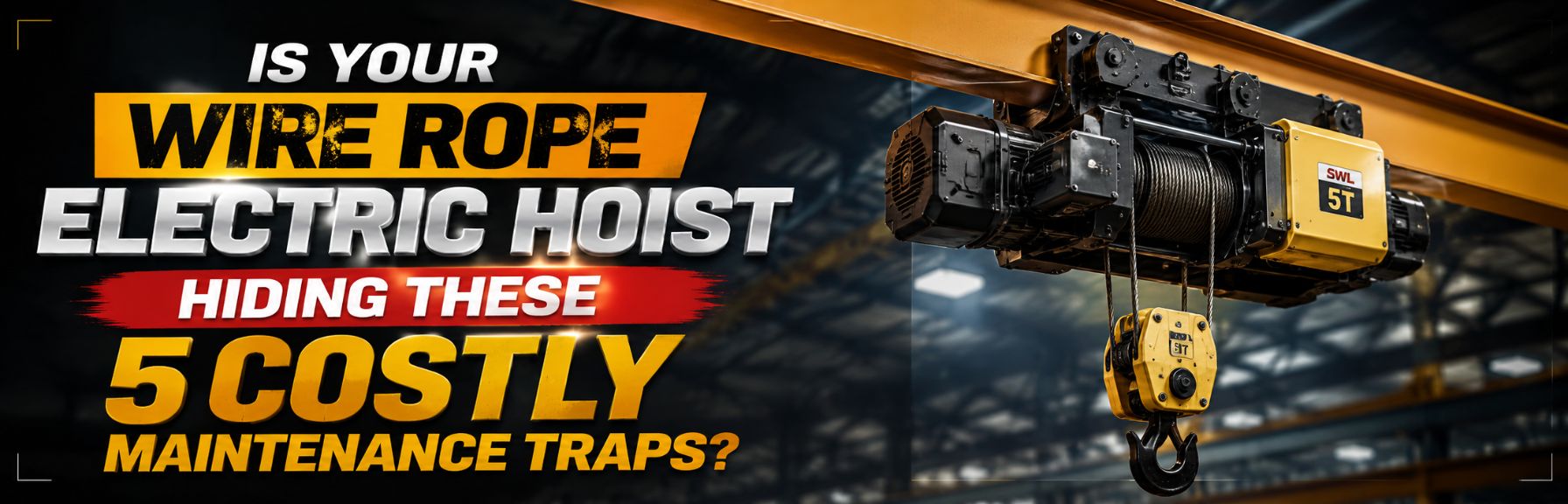
How to Choose the Right Wire Rope Electric Hoist for Your Lifting Needs?
In modern manufacturing plants, steel stockyards, warehouses, and heavy fabrication facilities, material handling efficiency directly dictates profitability. At the heart of these material handling operations is a piece of machinery that does the literal heavy lifting: the Wire Rope Electric Hoist.
Selecting the wrong lifting equipment leads to costly downtime, premature mechanical wear, production bottlenecks, and serious workplace safety hazards. On the other hand, choosing the correct hoist ensures seamless workflow, enhanced worker safety, and a significantly lower long-term cost of ownership.
Whether you are setting up a new production line in India or upgrading your material handling infrastructure for global exports, this comprehensive guide will help you navigate the selection process step by step—without getting lost in overly complex engineering jargon.
Understand Your Core Operational Requirements Before Buying
Before contacting a Wire Rope Electric Hoist Manufacturer, you must clearly understand your facility’s specific operational environment and material handling demands. Evaluating these core parameters beforehand ensures you select a hoist tailored precisely to your application.
+———————————————————————–+
| Key Operational Evaluation Checklist |
+———————————————————————–+
| 1. Safe Working Load (SWL) –> What is the maximum weight? |
| 2. Height of Lift –> How high must the load travel? |
| 3. Duty Cycle & Frequency –> How often will it operate daily? |
| 4. Operating Environment –> Indoor, outdoor, extreme heat/dust? |
| 5. Motion Control & Speed –> Is precise positioning required? |
+———————————————————————–+
Safe Working Load (SWL) & Weight Capacity
The first step in evaluating any industrial hoist is defining the maximum weight you plan to lift. Always calculate the maximum operational load and add a safety margin rather than sizing the equipment to your average weight demands.
- Never operate at 100% capacity continuously: Selecting a hoist that operates near its absolute threshold accelerates component wear.
- Account for specialized attachments: Remember that lifting beams, C-hooks, or specialized grabs add extra weight to the total load.
Height of Lift and Hook Approach
Measure the vertical distance from the floor to the highest point the hook must reach. Additionally, evaluate the hook approach—the physical space the hoist body occupies beneath the crane bridge or monorail track. High clearance hoists or low headroom designs are recommended for facilities with limited ceiling height to maximize usable hook travel.
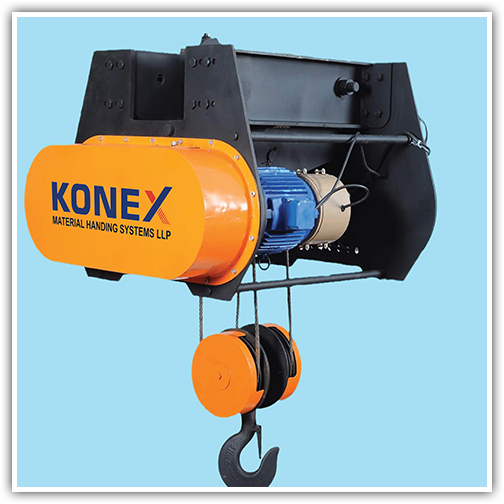
Key Factors to Consider When Selecting an Industrial Electric Hoist
Navigating hoist options becomes straightforward when you categorize decision factors into functional metrics. Here are the core criteria every facility manager and procurement professional should evaluate.
HOW TO MATCH HOIST TO OPERATIONAL DEMAND
OPERATIONAL USAGE RECOMMENDED HOIST CONFIGURATION
+———————–+ +———————————-+
| Intermittent / Light | ——–> | Standard Single-Speed Hoist |
| Assembly Lines | | (Basic Duty Class) |
+———————–+ +———————————-+
+———————–+ +———————————-+
| Continuous Shift / | ——–> | Heavy-Duty Modular Hoist |
| Steel Fabrication | | (Higher Duty Class + VFD Control)|
+———————–+ +———————————-+
+———————–+ +———————————-+
| Fragile / Precision | ——–> | Dual-Speed / Inverter Hoist |
| Mold & Die Handling | | (Micro-speed positioning) |
+———————–+ +———————————-+
1. Duty Class and Operating Frequency
Hoists are built for specific operational intensities. Running a light-duty hoist continuously in a multi-shift steel foundry will inevitably lead to overheating, motor burnout, and mechanical failure.
- Light to Medium Duty: Ideal for maintenance bays, small repair shops, or intermittent loading zones.
- Heavy Duty: Designed for high-frequency lifting cycles in automotive assembly, steel processing, and heavy machine shops.
Consulting an experienced Electric Hoist Manufacturer like Konex Material Handling System LLP allows you to accurately match the duty class of your machinery to your daily shift cycles, preventing over-spending on unneeded capacity or under-specifying equipment.
2. Lifting Speed and Precision Control
Speed matters, but control matters more. Depending on your material handling process, speed requirements will vary:
- Single-Speed Hoists: Best suited for standard loading and unloading tasks where exact positioning is not critical.
- Dual-Speed Hoists: Essential for applications requiring careful, slow placement followed by fast travel speeds (e.g., positioning dies, fragile glass, or alignment of heavy machine components).
- Variable Frequency Drives (VFD): Provide stepless, ultra-smooth acceleration and deceleration. VFDs minimize load swing, reduce mechanical stress on crane structures, and extend gear life.
3. Working Environment and Ambient Conditions
Operating conditions heavily influence hoist durability and housing requirements:
- Indoor Plant Applications: Standard protective enclosures usually suffice.
- Outdoor Yards / Ports: Require weather-proofing, anti-corrosive paint finishes, and protective motor covers.
- Foundries or Hot Metal Handling: Mandate heat-shielded wiring, high-temperature wire ropes, and thermal protection.
- Hazardous / Chemical Environments: Demand flame-proof or explosion-resistant enclosures to ensure workplace safety compliance.
Safety Features: Protecting Personnel and Assets
Workplace safety is paramount in modern material handling operations. A high-quality Wire Rope Electric Hoist serves as a vital safety barrier in heavy manufacturing environments.
+———————————————————————-+
| ESSENTIAL HOIST SAFETY SYSTEM |
+———————————————————————-+
| [Overload Limiter] –> Prevents lifting beyond safe weight limits|
| [Upper/Lower Limits] –> Stops over-travel of wire rope drum |
| [Fail-Safe Brakes] –> Holds load securely during power outage |
| [Emergency Stop Button]–> Immediate power shutdown for safety |
+———————————————————————-+
Key built-in safety mechanisms to verify include:
- Electromechanical Fail-Safe Brakes: Automatically engage during sudden power loss, keeping loads suspended safely.
- Upper and Lower Limit Switches: Prevent the wire rope from over-winding or completely unwinding off the drum, avoiding cable damage.
- Overload Cut-Off Protection: Prevents operators from accidentally lifting loads that exceed the rated hoist capacity.
- Thermal Motor Protection: Monitors motor temperatures to prevent thermal burnout during peak operating hours.
Wire Rope Hoists vs. Alternative Lifting Systems
Procurement managers often weigh wire rope hoists against chain hoists or manual tackle blocks. While electric chain hoists work well for lower capacities (typically up to 3–5 tons), wire rope hoists are the superior choice for high-capacity, heavy-duty industrial environments.
Feature / Metric | Electric Wire Rope Hoist | Electric Chain Hoist |
Lifting Capacity Range | High capacities (up to 50+ Tons) | Typically lighter loads (up to 5 Tons) |
Lifting Height | Exceptional for high-lift requirements | Ideal for moderate lifting heights |
Duty Cycle Capability | Engineered for continuous, heavy duty | Best for intermittent/medium duty |
Operation Smoothness | Very smooth wire rope spooling | Slight vibration from chain links |
Long-Term Durability | Robust drum & rope construction | Higher chain wear under heavy loads |
For long lifts, heavy industrial production, and continuous daily shifts, investing in a robust Wire Rope Electric Hoist delivers unmatched return on investment over its lifecycle.
Avoiding Hidden Costs in B2B Hoist Procurement
When procuring industrial machinery, the initial purchase price represents only a fraction of total lifetime expenditure. Focusing solely on upfront cost often leads to high total cost of ownership (TCO).
Common Procurement Pitfalls to Avoid:
- Selecting Low-Quality Non-Standard Components: Buying cheap hoists with proprietary, hard-to-find spare parts leads to extended equipment downtime when maintenance is needed.
- Ignoring Local Service and Support: Ensure your supplier offers accessible technical guidance, original spare parts, and prompt service support.
- Overlooking Customization Needs: Buying off-the-shelf equipment that does not fit your runway structure or building headroom results in expensive site modifications later.
Partnering directly with an established Wire Rope Electric Hoist Manufacturer allows you to configure hoists to your precise structural layout, saving time and money during installation.
Step-by-Step Buying Checklist for Procurement Managers
To streamline your procurement decision, follow this quick checklist before requesting a commercial proposal:
- Define Load Specifications: Identify maximum weight, average operational weight, and object dimensions.
- Measure Structural Clearances: Confirm lift height, available headroom, and trolley beam width.
- Determine Work Cycle: Calculate operating hours per day, lifts per hour, and duty class needs.
- Assess Environment: Check for moisture, extreme temperatures, ambient dust, or chemical exposure.
- Establish Speed Requirements: Decide between single-speed, dual-speed, or VFD-controlled lifting.
- Verify Service & Spare Availability: Confirm after-sales technical support and component availability.
Why Choose Konex Material Handling System LLP?
At Konex Material Handling System LLP, we design, engineer, and manufacture robust lifting solutions tailored to modern industrial challenges. Based in India with global export capabilities, we provide high-performance material handling equipment engineered for maximum safety, reliability, and smooth operation.
What Sets Konex Apart:
- Precision Engineering: Built using high-grade alloy components, precision-machined rope drums, and durable gearbox assemblies.
- Modular and Custom Designs: Standard and low-headroom configurations engineered to match your facility’s layout.
- Stringent Quality Control: Thorough factory testing ensures full compliance with international safety and performance standards.
- Global Export Capabilities: Trusted by industries across India and worldwide for durable material handling solutions.
- Comprehensive After-Sales Support: End-to-end guidance from initial selection to installation support and long-term spare parts availability.
Explore our full engineering range by visiting our Material Handling Equipment Overview or review our custom overhead solutions in our Industrial Crane & Hoist Solutions Guide.
Make a Confident Investment in Your Industrial Lifting Infrastructure
Selecting the right Wire Rope Electric Hoist requires balancing weight capacities, duty classes, speed controls, and environmental demands. By defining your operational parameters clearly and prioritizing safety and quality build over low initial cost, you ensure a long-lasting asset that drives plant efficiency for years to come.
Do not leave your plant efficiency or workplace safety to guesswork. The engineering team at Konex Material Handling System LLP is ready to assist you in designing and selecting the ideal hoisting equipment for your specific application.
Ready to Upgrade Your Material Handling Efficiency?
Get expert technical assistance today! Contact our team at Konex Material Handling System LLP to discuss your project requirements, request a tailored technical evaluation, or receive a competitive quotation.
FAQs
Choose a Wire Rope Electric Hoist based on your maximum load, lifting height, operating frequency, duty cycle, working environment, lifting speed, and positioning requirements. These factors help ensure the hoist matches your actual application without unnecessary over-sizing or under-sizing.
Before purchasing, evaluate the Safe Working Load (SWL), maximum lifting height, available headroom, operating hours, number of lifting cycles, environmental conditions, required lifting speed, and available service and spare-parts support.
Duty class determines how frequently and intensively the hoist can operate. Light-duty hoists are suitable for intermittent applications, while heavy-duty configurations are better for continuous or high-frequency operations such as steel fabrication, automotive production, and heavy machine shops.
The required lifting speed depends on the application. Single-speed hoists are suitable for standard lifting tasks, dual-speed hoists provide better control for precise positioning, and VFD-controlled hoists offer smooth acceleration and deceleration with reduced load swing.
Lift height determines how far the load must travel vertically, while hook approach refers to the available space between the hoist and surrounding structures. Facilities with limited headroom may benefit from a low-headroom hoist configuration to maximize usable hook travel.
Important safety features include fail-safe electromechanical brakes, upper and lower limit switches, overload cut-off protection, thermal motor protection, and an emergency stop system. These features help protect operators, loads, and equipment during lifting operations.
Yes, but the hoist configuration should match the environment. Outdoor applications may require weather protection and anti-corrosive finishes, while foundries and chemical environments may require specialized protection such as heat-resistant or explosion-resistant configurations.
Wire Rope Electric Hoists are generally preferred for higher-capacity, heavy-duty industrial lifting, high lifting heights, and continuous operations. Electric Chain Hoists are more commonly suited to lighter loads and intermittent lifting applications.
Reliable technical support, original spare-parts availability, installation guidance, and maintenance assistance can reduce downtime and long-term operating costs. Choosing an experienced manufacturer such as Konex Material Handling System LLP can provide support from hoist selection through installation and ongoing service.
Konex Material Handling System LLP manufactures high-quality Wire Rope Electric Hoists designed for reliability, safety, and long service life. Their hoists feature precision engineering, heavy-duty motors, fail-safe brakes, durable rope guides, and compliance with Indian and international quality standards, making them suitable for demanding industrial applications.