

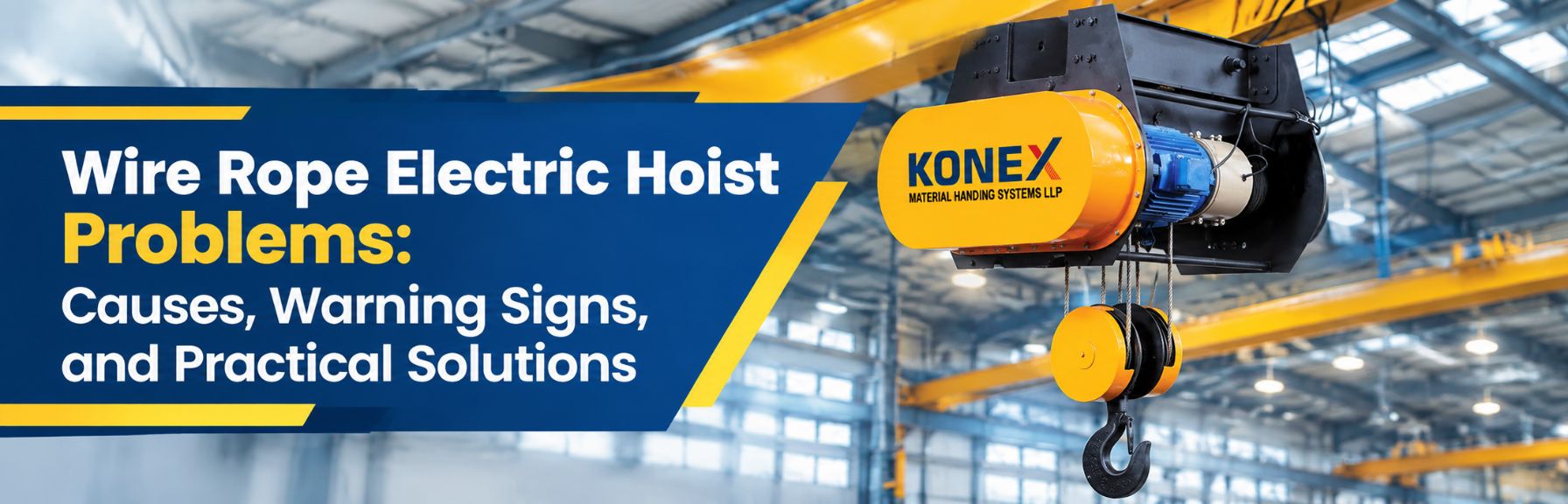
Common Wire Rope Electric Hoist Problems, Causes, and Practical Solutions
In modern manufacturing facilities, warehouses, steel yards, and heavy industrial plants, reliable lifting equipment is the backbone of daily operations. When material handling systems run smoothly, production schedules are met with ease. However, when an overhead lifting system experiences unexpected downtime, the entire operational flow comes to a costly halt.
Among all lifting machinery, the wire rope electric hoist is one of the most hardworking and vital components in any facility. Because these systems operate under heavy loads and continuous usage, experiencing occasional wear and tear is normal. Understanding the underlying causes of equipment failure, recognizing early warning signs, and implementing practical solutions can save your facility from expensive repairs, delayed deliveries, and workplace safety hazards.
In this comprehensive guide, we explore the most common operational challenges associated with electric wire rope hoists, how to spot warning signs early, and how proactive care can extend the operational life of your lifting equipment.
Why Wire Rope Electric Hoist Reliability Matters for Your Business
A material handling breakdown is rarely just an equipment issue—it is a business challenge. Unplanned hoist downtime directly affects your facility in several critical ways:
- Production Delays: Assembly lines and dispatch schedules stall when heavy materials cannot be safely moved.
- Elevated Operational Costs: Urgent emergency repairs and rushed replacement parts cost significantly more than planned maintenance.
- Workplace Safety Risks: Compromised lifting mechanisms, worn ropes, or failing brakes introduce serious hazards to machine operators and floor staff.
- Shortened Equipment Lifespan: Ignoring minor early warning signs often leads to severe cascade failures throughout the entire hoisting machinery.
By establishing a routine monitoring process and understanding how to troubleshoot basic issues, plant managers and maintenance engineers can keep productivity high and workplace environments safe.
Common Wire Rope Electric Hoist Problems & Root Causes
Understanding why a wire rope electric hoist malfunctions requires looking at its core moving parts: the steel wire rope, the motor, the braking mechanism, the drum guide, and the electrical controls. Below are the most frequent operational challenges encountered on factory floors.
1. Wire Rope Fraying, Kinking, or Premature Wear
The steel wire rope bears the direct tension of every load lifted. Over time, physical stress can lead to frayed strands, flattened sections, or kinking.
Root Causes:
- Off-Center Pulling: Lifting loads at an angle rather than directly under the hoist center causes the rope to rub aggressively against the drum grooves and rope guide.
- Inadequate Lubrication: Operating steel wire ropes without proper, manufacturer-approved lubrication increases friction and internal wire chafing.
- Overloading: Exceeding the rated lifting capacity causes structural stress on individual wire strands.
- Incorrect Rope Spooling: Slack in the line can cause the wire rope to jump drum grooves, leading to overlapping, crushing, and pinching.
2. Brake Slippage or Delayed Stopping
A hoist’s braking mechanism is its primary safety system. If the load continues to drift downward after the control button is released, immediate attention is required.
Root Causes:
- Worn Friction Discs: Continuous friction naturally thins the brake lining over extended periods of operation.
- Oil or Grease Contamination: Seals that leak oil onto the brake assembly severely reduce friction effectiveness.
- Improper Spring Tension: Thermal stress or long-term mechanical wear can weaken the internal brake springs.
3. Excessive Noise or Unusual Vibration During Operation
While industrial lifting machinery naturally generates sound, harsh grinding, clicking, or excessive structural vibration indicates internal mechanical friction or misalignment.
Root Causes:
- Gearbox Friction: Insufficient lubricant levels or contaminated gear oil lead to metal-on-metal wear inside the reduction gearbox.
- Bearing Wear: Aging or unlubricated bearings fail to rotate smoothly, causing deep humming or grinding noises.
- Structural Misalignment: Loose mounting bolts or misaligned trolley wheels force components to run unevenly along the crane beam.
4. Motor Overheating or Sudden Power Tripping
If the electric motor becomes extremely hot to the touch or repeatedly trips thermal relays, the system is attempting to draw excessive current to overcome resistance.
Root Causes:
- Exceeding Duty Cycles: Running non-stop heavy lifting cycles beyond the designed duty rating prevents the motor from dissipating heat naturally.
- Voltage Fluctuations: Unstable power supply or loose electrical connections cause current spikes.
- Mechanical Binding: Jammed trolley wheels or tight drum guides create heavy mechanical resistance, forcing the motor to work harder than designed.

5. Limit Switch Failure
Limit switches serve as critical safety cut-offs, stopping the hook block from traveling too high (hitting the drum) or lowering too low (unwinding the rope completely).
Root Causes:
- Physical Misalignment: Heavy mechanical vibration can gradually shift the position of limit switch actuators.
- Dust & Environmental Buildup: Industrial dust, moisture, or debris gathering around contact points can block physical or electrical activation.
- Electrical Contact Wear: Frequent activation causes contact points to arc, corrode, or weld shut over prolonged periods.
Early Warning Signs Every Operator Should Watch For
Preventative care is always more cost-effective than reactive repair. Facility supervisors and equipment operators should be trained to identify these early warning signs during daily operations:
Visual Signs | Audible Signs | Operational Signs |
Broken individual wires or surface corrosion on the rope | High-pitched squealing or metallic grinding sound | Jerky upward or downward hook motion |
Oil dripping from the gearbox or motor housing | Unusual clicking noises from the electrical panel | Delay between pressing the pendant button and movement |
Uneven wire rope wrapping across the drum grooves | Loud thumping during load movement | Load drifting down slightly after stopping |
Visible rust or wear on trolley wheel flanges | Rattling sound near the brake assembly | Motor shell feeling excessively hot during brief runs |
If any of these warning signs are observed, the equipment should be inspected by a qualified maintenance technician before continuing operations.
Practical Solutions & Preventive Maintenance Best Practices
To maximize machine up-time and maintain consistent safety, implement these practical maintenance steps across your workplace:
+-----------------------------------+
                  | DAILY PRE-SHIFT CHECK             |
                  | Visual rope & hook inspection     |
                  +-----------------+-----------------+
                                    |
                                    v
                  +-----------------------------------+
                  | OPERATIONAL TESTING               |
                  | Test limit switches & brake hold  |
                  +-----------------+-----------------+
                                    |
                                    v
                  +-----------------------------------+
                  | SCHEDULED MAINTENANCE             |
                  | Clean, lubricate & inspect gears  |
                  +-----------------+-----------------+
                                    |
                                    v
                  +-----------------------------------+
                  | ANNUAL CERTIFICATION              |
                  | Thorough load testing & audits    |
                  +-----------------------------------+
1. Enforce Straight-Line Lifting Protocols
Train all crane operators to position the hoist block directly above the load payload before lifting. Eliminating side-pulling dramatically preserves the life of the wire rope and rope guide.
2. Maintain a Strict Lubrication Schedule
Regularly apply approved wire rope dressing and keep gearbox oil at recommended levels. Proper lubrication repels moisture, reduces friction, and prevents premature core rusting.
3. Conduct Daily Pre-Shift Inspections
Establish a 2-minute daily checklist for operators:
- Inspect the lower hook latch mechanism.
- Check the wire rope for kinks, bird-caging, or broken strands.
- Test upper and lower limit switches without a load attached.
- Test the emergency stop button on the pendant controller.
4. Partner with an Authorised Inspection Service
Schedule periodic technical audits with an experienced Wire Rope Electric Hoist Manufacturer. Expert technicians can evaluate gear mesh, electrical resistance, and structural integrity before small issues turn into costly breakdowns.
When to Repair vs. When to Replace Your Hoist
Deciding whether to repair an existing lifting system or invest in a modern replacement depends on long-term cost efficiency and safety parameters:
- Choose Repair When: The issue is isolated (e.g., a worn rope guide, a single limit switch replacement, or minor seal renewal), and the machine has a clean service history.
- Consider Replacement When: Structural housings are damaged, the motor and gearbox require complete overhauls, spare parts are obsolete, or maintenance costs over the past year approach the cost of a new unit.
Upgrading to a modern, robust hoisting system often yields lower total operational costs, better energy efficiency, and enhanced safety features.
Train all crane operators to position the hoist block directly above the load payload before lifting. Eliminating side-pulling dramatically preserves the life of the wire rope and rope guide.
Why Leading Industries Trust Konex Material Handling System LLP
When it comes to high-performance material handling solutions, reliability and precise engineering are non-negotiable.
Konex Material Handling System LLP is a trusted Wire Rope Electric Hoist Manufacturer in India, delivering dependable, safety-driven lifting equipment engineered for rigorous industrial applications. Serving both domestic industries across Wire Rope Electric Hoist India markets and international clients through global export capabilities, Konex focuses on robust design, operational smoothness, and long-term durability.
What Sets Konex Apart?
- Proven Engineering Excellence: Designed to handle diverse load capacities with smooth, vibration-free lifting and travel performance.
- Built for Tough Operational Environments: Heavy-duty enclosures, precision-machined gears, and reliable braking systems ensure continuous productivity.
- Global Quality Standards: Manufactured to meet strict safety and quality benchmarks, making Konex hoists trusted across India and global export markets.
- Customer-Centric Support: From equipment selection and customized configurations to technical guidance and prompt spare parts supply, Konex stands by its products throughout their entire lifecycle.
Take Proactive Control of Your Material Handling Operations
Operational safety and machine productivity begin with reliable equipment and proactive care. If your facility is experiencing frequent hoist maintenance issues, or if you are looking to upgrade your existing lifting infrastructure with durable, high-performance machinery, expert support is just a message away.
Partner with Konex Material Handling System LLP for dependable, heavy-duty material handling solutions.
👉 [Contact Our Technical Experts Today] to request an engineering consultation, discuss your custom lifting requirements, or request a quote for your facility!
Contact us : info@konex.co.in , +91 98240 11164 | +91 90999 02956
FAQs
The most common wire rope electric hoist problems include wire rope fraying or kinking, brake slippage, excessive noise or vibration, motor overheating, power tripping, limit switch failure, and uneven rope spooling. Early inspection can help identify these issues before they cause major downtime or safety risks.
Wire rope can wear prematurely because of side pulling, overloading, inadequate lubrication, incorrect rope spooling, or repeated operation under unsuitable conditions. Keeping the hook directly above the load and following the manufacturer’s maintenance recommendations can help reduce unnecessary rope wear.
Brake slippage can result from worn friction components, oil or grease contamination, weakened spring tension, or other brake-system wear. If a suspended load drifts downward after the control is released, the hoist should be taken out of service and inspected by a qualified technician.
Grinding, clicking, squealing, humming, or thumping can indicate gearbox lubrication problems, bearing wear, loose components, trolley misalignment, or other mechanical issues. Unusual sounds should be investigated promptly rather than ignored.
A hoist motor may overheat because of excessive duty cycles, voltage fluctuations, loose electrical connections, mechanical resistance, or overloaded operation. Repeated overheating or thermal tripping requires inspection of both the electrical supply and mechanical components.
Important warning signs include broken or corroded rope wires, kinks or bird-caging, uneven rope winding, unusual noise, jerky hook movement, delayed response, load drifting, oil leakage, excessive motor heat, and abnormal brake or electrical-panel sounds.
A wire rope electric hoist should receive a visual and operational check before use or according to the manufacturer’s inspection schedule. More detailed periodic inspections should be performed by qualified personnel based on the hoist’s usage, duty, environment, and applicable safety requirements.
Preventive maintenance should include regular wire rope and hook inspections, brake and limit-switch testing, proper lubrication, gearbox inspection, electrical checks, and monitoring of abnormal sounds or movement. Operators should also avoid side pulling and loads above the rated capacity.
Straight-line lifting keeps the hoist and load properly aligned and reduces side loading on the wire rope, drum, rope guide, and related components. Positioning the hook directly above the load before lifting can help reduce premature wear and improve operating safety.
Repair may be appropriate when the problem is isolated and the main equipment remains in serviceable condition, such as a worn rope guide, faulty limit switch, or minor seal issue. Replacement may need consideration when major components are extensively damaged, spare parts are obsolete, or repeated repair costs make continued operation impractical.
An experienced wire rope electric hoist manufacturer can help identify recurring mechanical and electrical problems, assess component condition, recommend suitable maintenance practices, and provide replacement parts or equipment when required. Technical support can also help determine whether repairing the existing hoist or upgrading the lifting system is more appropriate.