

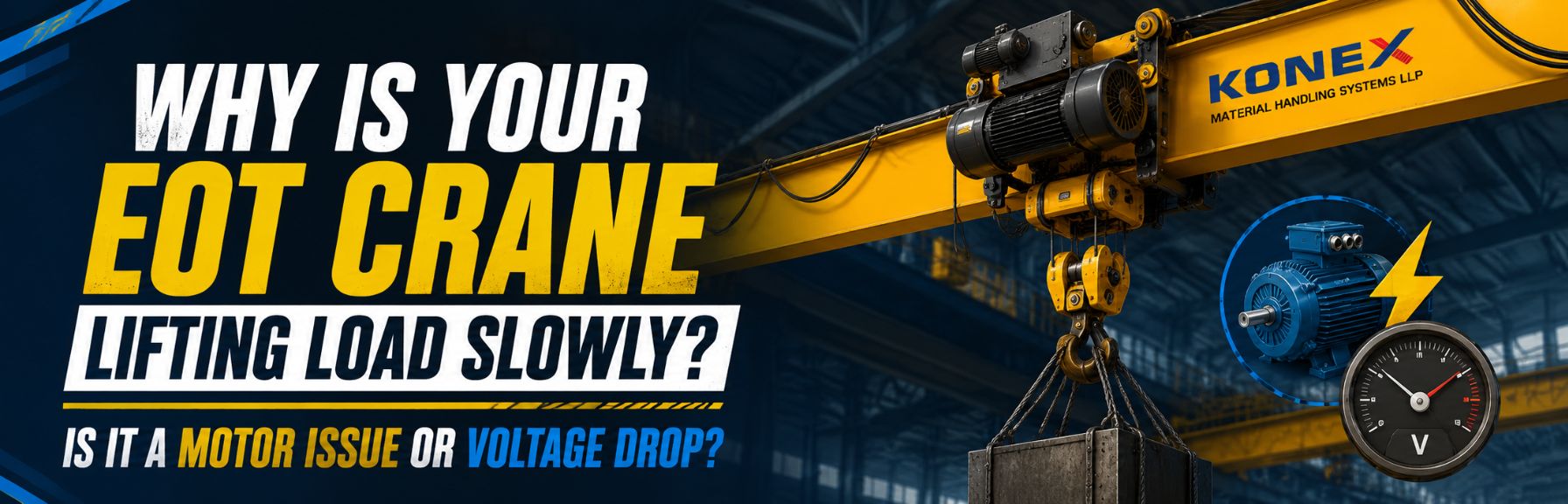
Why Is Your EOT Crane Lifting Load Slowly? Is It a Motor Issue or a voltage drop?
EOT Crane Lifting Slowly? Don’t Ignore This Warning Sign
When an EOT Crane starts lifting loads slower than usual, many factory operators assume the crane is simply getting old. However, slow lifting speed is often an early warning sign of a deeper issue that can affect productivity, increase downtime, and eventually lead to costly repairs.
In manufacturing plants, warehouses, fabrication facilities, steel industries, engineering workshops, and heavy material handling environments, every minute matters. If your crane takes longer to lift materials, production schedules can be delayed, worker efficiency can decrease, and operational costs can rise.
The most common question plant managers ask is:
“Is the problem caused by the motor, or is it due to voltage drop?”
The answer is not always straightforward. Several factors can affect lifting performance, and identifying the root cause early can save significant maintenance expenses.
In this guide, we’ll explain the most common reasons why an EOT Crane lifts slowly, how to identify the actual problem, and what steps industrial businesses can take to restore optimal performance.
Why Lifting Speed Matters in an EOT Crane
An EOT Crane is designed to move materials efficiently and safely. When lifting speed decreases, the impact goes far beyond the crane itself.
Slow lifting can lead to:
- Production bottlenecks
- Reduced operational efficiency
- Delayed loading and unloading activities
- Increased labor costs
- Unnecessary stress on crane components
- Reduced overall plant productivity
Whether you operate a Single Girder EOT Crane or a Double Girder EOT Crane, maintaining proper lifting performance is essential for smooth material handling operations.
First Sign: Has Your EOT Crane Become Gradually Slower?
Many industries ignore early warning signs because the slowdown happens gradually.
Operators may notice:
- Loads taking longer to reach required height
- Crane movement feeling less responsive
- Reduced lifting performance during peak operating hours
- Different lifting speeds at different times of the day
- Increased waiting time in production processes
If these symptoms sound familiar, it’s time to investigate the actual cause before the issue affects your business operations.
Could the Motor Be Causing Slow Lifting Performance?
One of the most common reasons behind slow lifting is a motor-related issue.
The lifting motor acts as the driving force of the crane. If its performance decreases, lifting efficiency naturally drops.
Some common indicators include:
Reduced Power Output
Over time, industrial equipment experiences wear and tear. Continuous operation under heavy workloads can reduce overall performance.
When the motor cannot generate sufficient power, lifting becomes slower and less efficient.
Increased Operating Temperature
Excessive heat can affect crane performance.
If the motor frequently operates at elevated temperatures, efficiency may decrease, resulting in slower lifting cycles.
Continuous Heavy-Duty Usage
Many facilities operate cranes throughout multiple shifts without adequate inspection intervals.
Long-term continuous operation can affect lifting responsiveness and eventually impact productivity.
Aging Equipment
Older cranes often experience performance decline due to years of industrial usage.
In many cases, businesses continue operating equipment until a major failure occurs rather than addressing early warning signs.
This approach often results in higher repair costs and unexpected downtime.
What Is Voltage Drop and Why Does It Matter?
Many industrial facilities focus immediately on the motor while overlooking another major factor: voltage drop.
Voltage drop occurs when the crane does not receive stable electrical power.
Even a perfectly healthy crane can experience lifting problems if the power supply is inconsistent.
When electrical supply fluctuates, lifting performance can suffer significantly.
This issue is particularly common in:
- Large manufacturing plants
- Industrial clusters
- Multi-machine production facilities
- Heavy engineering workshops
- Facilities operating multiple high-power machines simultaneously
How Voltage Drop Affects EOT Crane Performance
An EOT Crane depends on stable power to operate efficiently.
When power quality decreases, operators may observe:
Slower Lifting Speeds
The crane may still function, but lifting becomes noticeably slower.
Inconsistent Performance
The crane may operate normally during some shifts and slowly during others.
Reduced Productivity
Even small reductions in lifting speed can create significant production delays over time.
Increased Operating Stress
Unstable electrical supply can place additional strain on equipment and increase maintenance requirements.
Because voltage-related issues often mimic motor problems, many businesses spend money on unnecessary repairs before identifying the actual root cause.
How to Identify Whether the Problem Is Motor-Related or Voltage-Related
Before investing in repairs or replacement parts, it is important to evaluate the overall operating conditions.
Ask these questions:
Does the Crane Lift Slowly All the Time?
If lifting performance is consistently slow regardless of operating conditions, the issue may be related to equipment performance.
Does Slow Lifting Occur During Peak Production Hours?
If the crane performs differently throughout the day, power supply fluctuations may be contributing to the problem.
Have Other Machines Shown Similar Issues?
When multiple machines experience reduced performance simultaneously, electrical supply conditions should be investigated.
Has Maintenance Been Delayed?
Regular inspections often identify minor issues before they become major operational problems.
If maintenance schedules have been postponed, performance decline may be expected.
Why Ignoring Slow Lifting Can Become Expensive
Many companies continue operating a slow crane because it still completes the lifting task.
However, delayed action often creates larger problems.
Ignoring early signs can result in:
- Unexpected shutdowns
- Emergency repair expenses
- Production delays
- Increased maintenance costs
- Lower workforce efficiency
- Missed project deadlines
For industries operating under strict production schedules, these consequences can directly impact profitability.
The Importance of Preventive Maintenance
The most successful industrial facilities focus on prevention rather than reaction.
Routine crane inspections help identify issues before they affect production.
A proactive maintenance approach can help:
- Improve crane reliability
- Reduce downtime
- Increase operational efficiency
- Extend equipment life
- Improve workplace safety
- Lower long-term operating costs
Whether your facility uses a Single Girder EOT Crane or a Double Girder EOT Crane, regular maintenance remains one of the smartest investments you can make.
Choosing the Right EOT Crane Partner Matters
When crane performance issues occur repeatedly, businesses often discover that support quality matters just as much as equipment quality.
A reliable EOT Crane Manufacturer can provide:
- Professional inspections
- Performance evaluations
- Preventive maintenance guidance
- Modernization recommendations
- Long-term operational support
Industrial buyers increasingly prefer manufacturers who understand not only crane production but also real-world plant challenges.
Why Industries Across India Trust Konex Material Handling System LLP
As a trusted EOT Crane Manufacturer and material handling solutions provider, Konex Material Handling System LLP helps industries improve lifting performance, reduce downtime, and maximize productivity.
Our solutions support a wide range of industries across India and international markets.
Whether your requirement involves a:
- Single Girder EOT Crane
- Double Girder EOT Crane
- Customized lifting solution
- Industrial material handling system
our team focuses on delivering dependable performance backed by professional support.
As an experienced Double Girder EOT Crane Manufacturer, we understand the operational challenges faced by modern industries and provide solutions designed for long-term reliability.
Why Slow Lifting Should Never Be Ignored
A slow-moving EOT Crane is more than a maintenance concern—it is often a warning signal that something requires attention.
The issue could be related to equipment performance, power supply conditions, maintenance practices, or operational demands.
The key is identifying the root cause early before productivity losses become significant.
If your crane is lifting loads slower than usual, now is the right time to evaluate the situation and take corrective action.
A properly maintained crane delivers better efficiency, safer operations, reduced downtime, and stronger business performance.
Partner with Konex Material Handling System LLP
Looking for a reliable EOT Crane Manufacturer in India?
Konex Material Handling System LLP provides dependable material handling solutions designed for modern industrial environments. From Single Girder EOT Crane systems to advanced Double Girder EOT Crane solutions, our team helps businesses achieve safer, faster, and more efficient operations.
Contact Us Today
Get expert guidance for your crane performance challenges and discover the right solution for your industry.
Contact Us : +91 9824011164 | +91 90999 02956
FAQs
An EOT Crane may lift loads slowly due to motor performance issues, unstable power supply, delayed maintenance, excessive wear, or electrical problems. Identifying the root cause early helps prevent production delays and costly downtime.
Yes. A voltage drop can reduce the power available to the crane, causing slower lifting speeds and inconsistent performance. Many industrial facilities experience lifting issues due to power fluctuations rather than mechanical failures.
If your EOT Crane consistently lifts slowly regardless of the time of day or operating conditions, the motor may require inspection. Reduced lifting efficiency, overheating, and decreased responsiveness are common indicators of motor-related issues.
Common signs include slow lifting during peak operating hours, inconsistent crane performance, fluctuating lifting speeds, and reduced efficiency when multiple machines are running simultaneously.
Yes. Lack of regular maintenance can lead to wear and performance decline, resulting in slower lifting operations. Preventive maintenance helps maintain productivity and reduces unexpected breakdowns.
Yes. Attempting to lift loads beyond the crane’s intended capacity can reduce lifting performance, increase operational stress, and create safety risks. Always follow recommended load limits.
This often indicates a power supply issue rather than a mechanical problem. Voltage fluctuations, peak power demand, or unstable electrical conditions can affect crane performance throughout the day.
Regular inspections, preventive maintenance, timely repairs, proper operator practices, and stable power supply conditions can help improve lifting efficiency and overall crane performance.
You should contact an EOT Crane Manufacturer when lifting performance declines, downtime increases, maintenance issues become frequent, or you need a professional crane health assessment.
Konex Material Handling System LLP is a trusted EOT Crane Manufacturer in India, offering reliable Single Girder EOT Crane and Double Girder EOT Crane solutions, expert support, and customized material handling systems for industrial applications across India and global markets