

Single Girder EOT Crane Span and Capacity Selection Guide
Selecting the right material handling equipment is one of the most critical decisions a factory owner, plant manager, or procurement lead can make. Installing a single girder eot crane that doesn’t fit your operational needs can lead to unexpected downtime, structural stress on your building, or unnecessary capital expenditure. On the flip side, getting the combination of weight capacity and span distance right ensures smooth workflow, maximum safety, and long-term cost savings.
If you are planning to upgrade your facility or design a new industrial workshop, this guide walks you through the essentials of selecting the ideal capacity and span for a single girder overhead traveling crane—without getting bogged down in overly complex engineering math.
What Makes a Single Girder EOT Crane the Right Fit for Your Facility?
Before diving into numbers, it helps to understand why this specific crane type is a preferred choice across manufacturing, warehousing, and fabrication facilities worldwide.
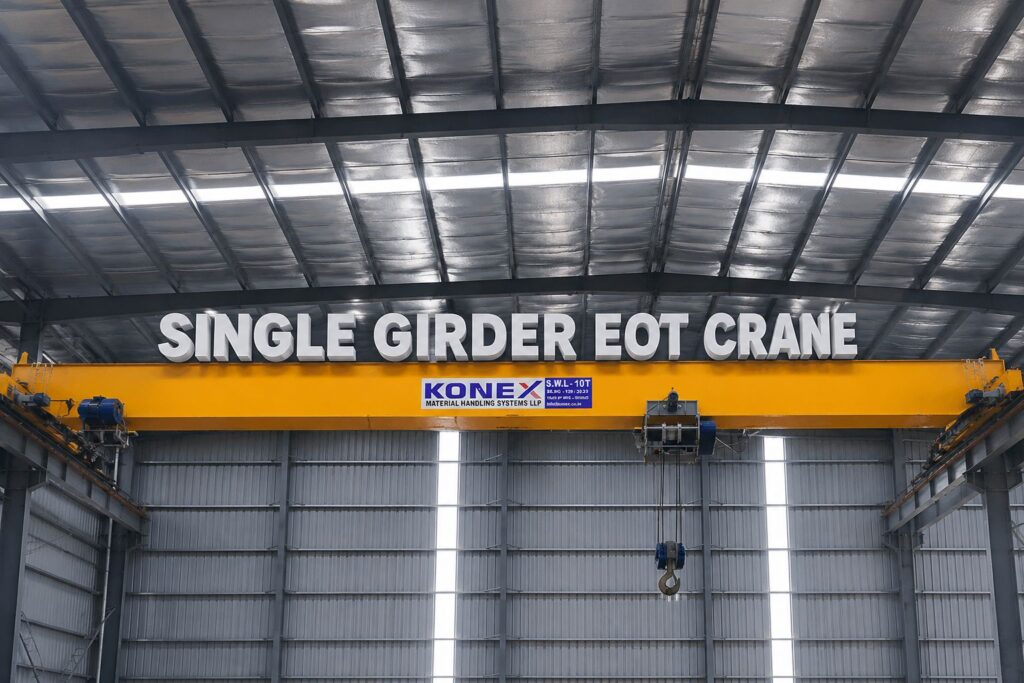
A single girder eot crane consists of a single bridge beam supported by end trucks on either side. The hoisting mechanism runs along the bottom flange of this single bridge girder.
Key operational benefits include:
- Cost Efficiency: Requires less steel and lighter runway structures compared to double girder alternatives, making it more budget-friendly.
- Optimised Building Weight: Exerts less dead load on your facility’s support pillars and foundation.
- Floor Space Utilisation: Provides excellent hook coverage for light to medium-duty operations while saving valuable headroom.
Whether you run a machine shop in India or an assembly plant overseas, matching the crane to your workspace geometry is the first step toward efficient material handling.
Step 1: Determining the Right Single Girder EOT Crane Capacity
One of the most common mistakes in factory planning is picking crane capacity based solely on the heaviest object you currently move. Capacity selection requires a balance between daily working requirements and future growth.
When evaluating single girder eot crane capacity, consider these three operational factors:
1. Maximum Rated Load vs. Average Load
Identify the absolute heaviest load your facility will lift in a typical cycle. While it is tempting to buy a crane rated exactly at your maximum weight, leaving a safety margin ensures smoother operation and extends the lifespan of the hoist system and motor.
2. Operational Duty Cycle
How frequently will the crane operate?
- Light Duty: Periodic lifting throughout the day (e.g., maintenance bays or assembly points).
- Medium to Heavy Duty: Continuous lifting for hours during shifts (e.g., steel fabrication or production lines).
Even if two facilities lift the same 5-ton weight, a facility lifting it 50 times a day requires a higher duty rating than one lifting it 3 times a day.
3. Future Expansion Needs
Replacing a crane within 3 to 5 years due to business growth is an avoidable expense. If your operational volume is projected to increase, choosing a slightly higher capacity upfront is significantly more economical than retrofitting building structures later.
Step 2: Mastering EOT Crane Span Selection
Understanding eot crane span selection is critical to ensure that your equipment fits perfectly within your facility layout without interfering with walls, columns, or existing machinery.
What is Crane Span?
In simple terms, span refers to the horizontal distance between the centerlines of the two runway rails on which the crane travels.
To select the correct span, evaluate the following:
- Building Width and Column Centres: The span must align with the building’s structural column layout.
- Hook Approach Distance: Remember that the hook cannot reach the absolute edge of the building wall. Side clearances are required for the trolley movement. Ensure your layout accounts for how close to the wall your material needs to be placed.
- Headroom Clearances: Measure the vertical height from the floor to the lowest overhead obstacle (trusses, lighting fixtures, or HVAC ducts) to ensure the crane bridge and hoist operate safely without obstruction.
An accurate measurement during the layout stage prevents expensive modifications during installation.
Practical Checklist for Factory Owners and Procurement Heads
Refer to this simple overhead crane capacity guide checklist before finalising your order:
- Identify Maximum Load Weight: Add a reasonable safety cushion above your heaviest standard lift.
- Measure Rail-to-Rail Center Distance: Confirm your building structure can comfortably support the required span.
- Determine Daily Usage Hours: Define whether your production demands periodic or continuous duty cycles.
- Check Building Clearances: Verify top, side, and hook travel clearances.
- Verify Safety and Manufacturing Standards: Ensure the equipment adheres to established safety guidelines and quality manufacturing protocols.
Why Work with a Dedicated EOT Crane Manufacturer?
Selecting the right span and capacity isn’t just about buying off-the-shelf equipment; it is about engineering a solution tailored to your production floor. Partnering with an experienced EOT Crane Manufacturer ensures that your building design, load requirements, and operational safety align seamlessly.
Why Choose Konex Material Handling System LLP?
Based in India and serving clients across domestic and international markets, Konex Material Handling System LLP specializes in custom-built material handling solutions designed for reliability, safety, and operational longevity.
- Customized Engineering: Every facility is unique. Konex designs cranes to meet exact span, height, and duty requirements.
- Quality Assurance: Built using high-grade materials and rigorous testing protocols to ensure maximum uptime.
- Global Delivery Capabilities: Serving clients in India with strong export capability to support international manufacturing hubs.
- End-to-End Support: From initial site assessment and layout guidance to installation and post-sales support.
As a leading Single Girder EOT Crane Manufacturer, Konex helps you make informed choices that protect your workforce and optimize your capital investment.
Get an Expert Span & Capacity Consultation for Your Facility
Choosing the right overhead crane doesn’t have to be complicated. If you are uncertain about calculating the exact span, selecting the right duty rating, or planning your facility layout, our engineering team is here to help.
Ready to optimize your material handling workflow?
Connect with the engineering experts at Konex Material Handling System LLP today for a customized proposal and expert layout evaluation.
+91 9824011164 | +91 90999 02956
FAQs
Choose the capacity based on the maximum load you regularly lift, the frequency of lifting cycles, operating hours, duty requirements, and expected future expansion. The crane should provide an appropriate working margin rather than being selected only for the heaviest current load.
The span of a single girder EOT crane is the horizontal distance between the centerlines of the two runway rails. The required span depends mainly on the building width, column arrangement, runway layout, hook coverage requirements, and available clearances.
Important factors include building width, column centres, runway rail position, hook approach distance, side clearances, headroom, overhead obstructions, and the areas where materials need to be picked up or placed. Accurate measurements help ensure effective crane coverage.
No. Selecting a crane with unnecessarily high capacity can increase equipment and structural costs without providing operational benefits. Capacity should be matched to the actual lifting requirement, duty cycle, working environment, and reasonable future production needs.
Duty cycle indicates how frequently and intensively the crane operates. A crane used occasionally for maintenance may have different duty requirements from one used continuously in a production or fabrication facility. Load frequency, operating hours, lifting cycles, and production demands should therefore be evaluated before selection.
Hook approach determines how close the crane hook can safely reach walls, columns, machinery, and other areas of the facility. Considering hook approach during span selection helps improve usable floor coverage and prevents inaccessible material-handling zones.
Yes. A single girder EOT crane can be designed around the facility’s required span, lifting capacity, lifting height, hook coverage, operating conditions, and building layout. A customized approach is particularly useful when standard crane dimensions do not suit the available workspace.
Yes. Expected increases in load weight, production volume, lifting frequency, or material-handling requirements should be considered before finalizing crane capacity. Planning for reasonable future requirements can help avoid premature crane replacement or costly modifications later.
A specialized Single Girder EOT Crane Manufacturer can evaluate load requirements, duty cycle, building dimensions, span, headroom, hook coverage, and operational conditions before recommending a crane. This helps ensure that the selected system is suitable for the facility rather than being based only on standard equipment options.
Konex Material Handling System LLP helps industrial buyers evaluate their lifting requirements, crane capacity, span, duty cycle, building layout, and operational needs. As a Single Girder EOT Crane Manufacturer, Konex provides customized material handling solutions for industrial facilities in India with global export capability. Buyers can contact the engineering team for a customized span and capacity evaluation.