

10 Critical Safety Tips for Operating Semi Gantry Cranes Safely
In the high-stakes environment of Indian manufacturing and global industrial logistics, safety isn’t just a regulatory checkbox—it is the backbone of operational efficiency. For factory owners and plant managers, a single mishap involving heavy lifting equipment can lead to catastrophic downtime, expensive litigation, and, most importantly, risk to human life.
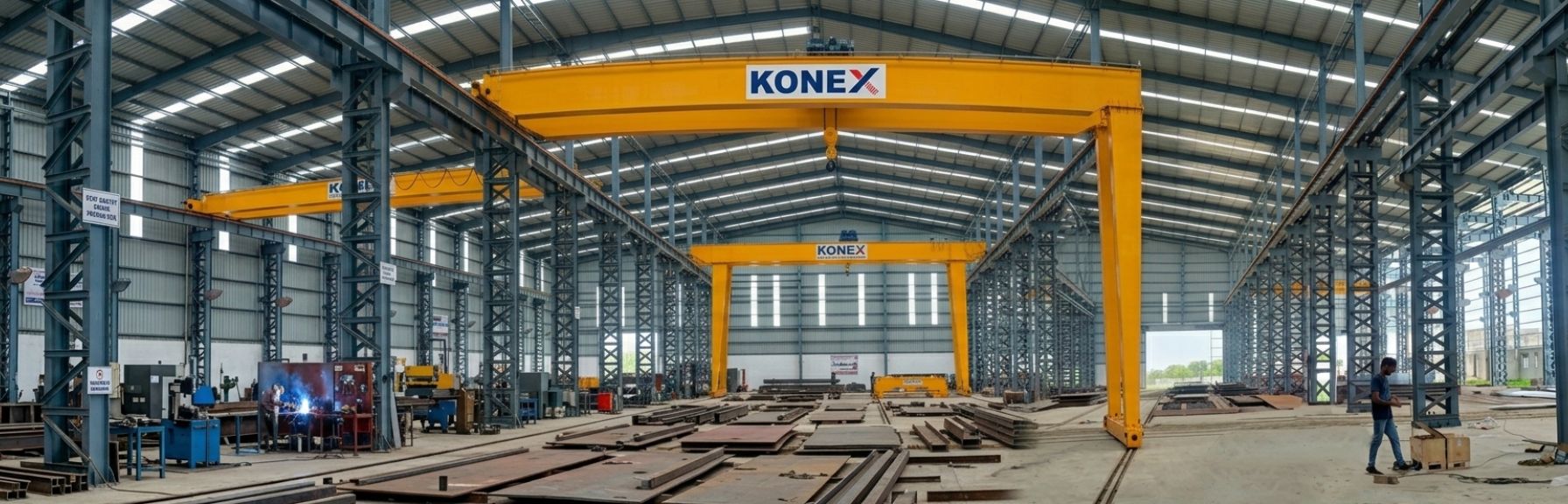
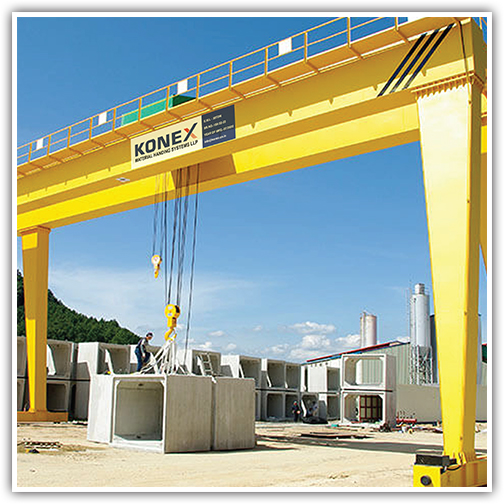
The Semi Gantry Crane is a versatile powerhouse in modern workshops. By utilising one overhead runway and one floor-mounted rail, it maximises floor space while providing high-capacity lifting. However, its unique “hybrid” design requires specific safety protocols to ensure peak performance.
As a leading semi-gantry crane manufacturer, Konex Material Handling System has engineered hundreds of lifting solutions for the Indian and global markets. In this guide, we share 10 critical safety tips to help you maintain a zero-incident workspace while optimising your crane’s lifecycle.
Why Safety is Your Best Investment
Before diving into the tips, it is vital to understand the “Cost of Neglect.” In India, where industrial growth is accelerating, procurement heads often focus on the initial cost. However, a semi-gantry crane India specialists recommend looking at the Total Cost of Ownership (TCO). A safe crane is a productive crane. Regular safety adherence reduces wear and tear, prevents sudden motor failures, and extends the equipment’s life by up to 40%.
1. Conduct Mandatory Pre-Operational Inspections
Safety starts before the “Power On” button is even pressed. Every operator must follow a daily checklist.
- Check the Rails: Ensure the floor rail is free of debris, oil, or obstructions. Even a small bolt on the track can cause a jump or derailment.
- Wire Rope & Hooks: Look for fraying, “bird-caging,” or cracks in the hook.
- Visual Alignment: Ensure the bridge is sitting squarely on the end carriages.
2. Master the “Dual-Path” Awareness
Unlike a standard overhead bridge crane, a Semi Gantry Crane operates on two different levels. One side moves along a wall-mounted gantry girder, while the other moves on the floor.
- Tip: Operators must be trained to clear both the overhead path and the floor path simultaneously. Pedestrian traffic near the floor rail is the most common cause of accidents in busy Indian factories.
3. Respect the Rated Load Capacity
It sounds elementary, but “load creeping” is a common issue in maintenance-heavy industries. A Semi Gantry Crane is precision-engineered for a specific Safe Working Load (SWL).
- Never Overload: Exceeding the SWL stresses the structure and the hoist motor, leading to structural fatigue.
- Visibility: Ensure the SWL is clearly painted on both sides of the crane bridge in large, high-contrast lettering.
4. Implement Strict “No-Fly” Zones
In a crowded shop floor, the temptation to move a load over workers or expensive machinery is high to save time.
- Protocol: Loads should never be carried over people. Establish dedicated “crane corridors” where possible.
- Communication: Use audible alarms and floor-projected laser lines to indicate the crane’s movement zone.
5. Address the “Side Pull” Hazard
Semi gantry cranes are designed for vertical lifting. Attempting to pull a load horizontally (side pulling) puts immense lateral stress on the floor rail and the overhead runway.
- The Risk: Side pulling can cause the crane to tip or the wire rope to jump out of the drum grooves.
- The Fix: Always position the hoist directly above the centre of gravity of the load before lifting.
6. Standardize Hand Signals and Communication
In the noisy environment of a manufacturing plant, verbal instructions are often lost.
- Solution: Implement the IS (Indian Standard) or OSHA-approved hand signals. Whether using a pendant control or a remote radio control, the “Signal Person” and the “Operator” must be in total sync.
- Technology Upgrade: As a premier Semi Gantry Crane manufacturer, Konex recommends moving to wireless radio remotes to allow the operator to stand at a safe distance with the best vantage point.
7. Daily Check of Limit Switches
The limit switch is the “silent guardian” of your crane. It prevents the hook block from smashing into the drum (upper limit) or hitting the floor (lower limit).
- Test Procedure: At the start of every shift, the operator should slowly raise the hook to verify the limit switch triggers correctly. Never use the limit switch as a “stop” button for operational convenience; it is an emergency device only.
8. Prevent Floor Rail Trip Hazards
The floor-mounted rail of a Semi Gantry Crane in India is often a point of contention for safety officers.
- Visual Safety: Paint the area around the floor rail in bright “Safety Yellow.”
- Flush Mounting: If you are in the planning stage, consult with Konex about “flush-mounted” rail designs that minimize trip hazards for staff and forklifts.
9. Professional Preventive Maintenance (PM)
Internal “handyman” fixes are the enemy of industrial safety.
- Expert Oversight: Schedule quarterly audits by a certified Semi Gantry Crane manufacturer. They can identify microscopic cracks in welds or electrical degradation in the VFD (Variable Frequency Drive) that an untrained eye might miss.
- Lubrication: Proper lubrication of the gears and wire rope reduces friction-induced heat, a leading cause of component failure.
10. Operator Training and Certification
A crane is only as safe as the person at the controls.
- Training: Ensure operators understand the physics of “load swing” and how to catch a swing smoothly.
- Documentation: Keep a logbook for every crane. In the event of a government audit or insurance claim, a well-documented maintenance and training log is your best defence.
The Konex Advantage: Safety Engineered into the Design
At Konex Material Handling System, we don’t just build cranes; we build peace of mind. Our Semi Gantry Cranes are designed with several built-in safety features that go beyond the industry standard:
- Overload Protection: Automatic sensors that cut power if an unsafe load is detected.
- Anti-Sway Technology: Sophisticated VFD programming to minimise load swinging during acceleration and braking.
- Durability for Indian Conditions: Our cranes are built to withstand the voltage fluctuations and high-dust environments common in Indian industrial hubs like Pune, Ahmedabad, and Chennai.
Looking to Upgrade Your Material Handling?
Whether you are setting up a new facility or upgrading an existing production line, choosing the right Semi Gantry Crane India partner is crucial. We offer global-standard engineering with local service agility.
Reduce your downtime and protect your workforce today.
Contact Konex Material Handling System for a Custom Quote | Download our Technical Specification Guide
Contact us : info@konex.co.in , +91 98240 11164 | +91 90999 02956
FAQs
The most critical safety tips include daily pre-operational inspections, never exceeding the Safe Working Load (SWL), avoiding side pulling, maintaining clear crane paths, using proper communication signals, and ensuring trained operators handle the equipment. Regular preventive maintenance and proper rail upkeep are also essential for safe operations.
Pre-operational inspections help identify issues like rail obstructions, wire rope damage, or misalignment before operation. Detecting these problems early prevents accidents, reduces downtime, and extends the crane’s lifespan.
The Safe Working Load (SWL) is the maximum weight a Semi Gantry Crane can safely lift. Exceeding this limit can cause structural damage, motor failure, or accidents, making it crucial to always operate within rated capacity.
Side pulling occurs when a load is lifted at an angle instead of vertically. It puts excessive lateral stress on the crane structure and rails, increasing the risk of tipping, derailment, or wire rope failure.
Operators can prevent accidents by following safety protocols, maintaining clear crane paths, avoiding lifting loads over people, using proper hand signals, and ensuring full visibility of both overhead and floor travel paths.
Semi Gantry Cranes operate on both an overhead runway and a floor-mounted rail. Operators must monitor both paths simultaneously to avoid collisions with workers, machinery, or obstacles—especially in busy factory environments.
Semi Gantry Cranes should undergo daily checks, weekly inspections, and professional preventive maintenance at least quarterly. Regular servicing helps detect wear and tear, ensures compliance, and prevents unexpected breakdowns.
Limit switches prevent over-lifting or over-lowering of the hook. They act as a safety mechanism to avoid mechanical damage or accidents, but should never be used as a routine stopping method.
Properly trained operators understand load dynamics, crane controls, and safety procedures. Certification and regular training reduce human errors, improve efficiency, and ensure compliance with industrial safety standards.
A properly operated and maintained Semi Gantry Crane reduces manual handling risks, minimizes accidents, optimises material flow, and increases operational efficiency—ultimately lowering total cost of ownership.