

Double Girder EOT Crane Maintenance Checklist for Industrial Plants
In heavy manufacturing, metallurgy, automotive, and large-scale industrial plants, equipment reliability directly dictates operational profitability. Among all material handling assets, the Double Girder EOT Crane serves as the backbone of heavy lifting operations. Whether moving raw steel coils, heavy machinery, or liquid metal, these heavy-duty overhead cranes work continuously under demanding conditions.
However, even the most robustly engineered lifting systems require structured care. Neglecting routine care leads to unscheduled downtime, expensive component repairs, and compromised workplace safety.
Implementing a systematic eot crane maintenance strategy ensures maximum productivity, extends machinery lifespan, and creates a safe working environment for your workforce.
This comprehensive guide by Konex Material Handling System LLP provides a practical, easy-to-follow crane inspection checklist designed for plant managers, maintenance engineers, and safety officers.
Why Planned Double Girder Crane Maintenance Matters
Unplanned machine downtime cost industrial facilities thousands of dollars per hour in lost throughput. Because a Double Girder EOT Crane handles heavier capacities and wider spans than single girder alternatives, component wear occurs across multiple critical points—including hoists, end carriages, trolley travel mechanisms, and electrical panels.
A proactive industrial crane maintenance strategy delivers four primary business advantages:
- Minimized Unplanned Downtime: Early detection of minor wear prevents catastrophic mechanical failure during active production shifts.
- Enhanced Workplace Safety: Rigorous eot crane safety inspection routines drastically reduce risks associated with load drops, brake failures, or structural strain.
- Extended Equipment Lifespan: Proper lubrication, alignment checks, and timely component replacements protect your initial capital investment for decades.
- Regulatory & Audit Compliance: Documented maintenance schedules ensure compliance with national and international industrial safety standards.
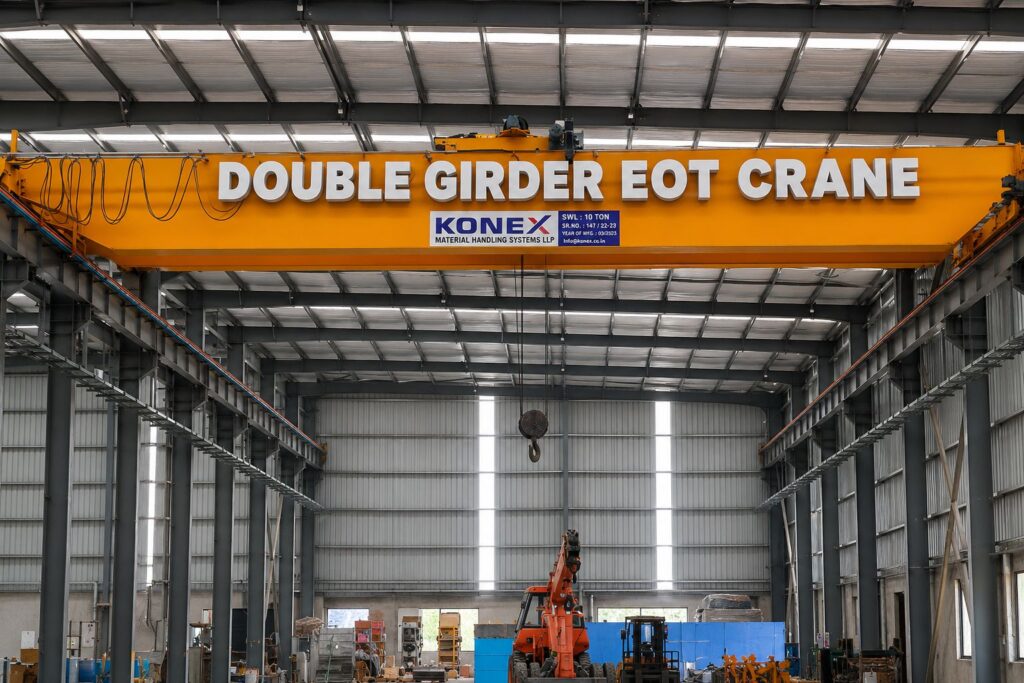
The Master Maintenance Schedule & Checklist
To simplify plant operations, effective double girder crane maintenance should be structured into daily, weekly, monthly, and annual routines.
Here is a quick-reference chart designed for plant maintenance teams:
Frequency | Target Area | Key Inspection Points | Primary Objective |
Daily (Pre-Shift) | Control & Safety | Pendant controls, emergency stop switch, warning lights, horn, visual cable check | Ensure immediate operational safety |
Weekly | Hoist & Brakes | Wire rope lubrication, upper/lower limit switches, main brake response | Prevent load slip and mechanical jams |
Monthly | Electrical & Drive | Gearbox oil levels, wheel alignment, contactors, festoon cable tracks | Maintain smooth motion & drive efficiency |
Quarterly | Structural & Tracks | Bridge girder bolts, runway rail alignment, end truck bumpers | Detect structural fatigue & wear |
Annual | Comprehensive | Full structural weld audit, motor insulation test, certified load test | Validate overall safety & compliance |
Step-by-Step Crane Inspection Breakdown
1. Daily Pre-Shift Safety Checks (Operator Level)
Before initiating any lifting cycle, the equipment operator must perform a brief visual and functional evaluation:
- Control Functionality: Test the push-button pendant or radio remote controller. Confirm that all directional buttons (Bridge, Trolley, Hoist) respond smoothly without delay.
- Emergency Stop System: Depress the emergency stop button to confirm immediate power cutoff to all crane motions.
- Visual Wire Rope Inspection: Check for obvious bird-caging, kinked strands, or severe corrosion along the visible portion of the wire rope.
- Warning Systems: Verify that warning horns, flashers, and anti-collision sensors function correctly.
2. Mechanical Component Checks (Weekly to Monthly)
Mechanical systems undergo continuous physical friction. Regular maintenance of these assemblies prevents premature fatigue.
- Hoisting Mechanism & Wire Rope:
- Clean and re-apply recommended heavy-duty grease along the wire rope drum and sheaves.
- Inspect rope guide alignment to ensure clean spooling without overlapping.
- Check hook latch safety catches for proper spring tension and smooth operation.
- Braking Systems:
- Inspect thruster brakes and electromagnetic hoist brakes for pad wear.
- Check brake clearance gaps and adjust according to manufacturer guidelines to ensure instantaneous holding power under rated load.
- Gearboxes & Couplings:
- Monitor oil levels in hoist, trolley, and bridge drive gearboxes.
- Check for unusual oil seepage or leakage around shaft seals.
- Listen for abnormal gear mesh noise or excessive vibration during operation.
3. Electrical & Drive System Audits
The electrical backbone of a Double Girder EOT Crane manages power distribution and precise motor speed control.
- Festoon & Conductor Bar Systems: Inspect festoon cables for wear, cracked insulation, or twisted tow wires. Ensure DSL (Downshop Lead) current collectors maintain firm contact along the busbar.
- Control Panels & Inverters: Blow out dust from main control panels using dry compressed air. Inspect contactors for pitting, check connection terminal tightness, and ensure cooling fans are functional.
- Limit Switches: Test both primary and secondary upper limit switches to prevent dangerous over-hoisting or hook-block contact with the drum.
4. Structural & Runway Rail Integrity Checks
Structural stability is critical for double girder designs due to the high capacity and heavy wheel loads involved.
- Bridge Girder & Trolley Frame: Visually inspect main box girders, diaphragm plates, and cross-bracings for any signs of cracking, excessive deflection, or paint flaking caused by stress.
- Wheel & Runway Rail Alignment:
- Inspect bridge and trolley wheels for flange wear, tread pitting, or skewing.
- Check runway rail fasteners, joint plates, and rubber pads for loosening. Misaligned rails cause excessive flange wear and unnecessary drag on bridge motors.
Best Practices for Building a Sustainable Maintenance Schedule
Establishing a successful overhead crane maintenance schedule requires disciplined execution and clear documentation:
- Maintain Digital Logbooks: Record every inspection, part replacement, and lubrication cycle digitally. Clear history speeds up troubleshooting during unexpected faults.
- Train Operators Thoroughly: Teach crane operators to recognize subtle signs of wear—such as unusual sounds, sluggish braking, or jerky travel motion—and report them immediately.
- Use Genuine OEM Parts: Replacing worn components with generic, uncertified parts compromises system safety and can void machinery warranties.
- Partner with a Certified Manufacturer: Periodic professional audits by an experienced crane manufacturer ensure hidden mechanical stress points are identified long before failure occurs.
Maintenance Checklist for Different Industrial Environments
The basic checklist remains useful across industries, but the maintenance focus may change according to the environment.
Steel and Fabrication Plants
Pay close attention to heat exposure, dust, structural condition, lifting components, and operating-area cleanliness.
Foundries
Environmental conditions can be demanding, so inspection should consider heat, dust, contamination, and the condition of electrical and mechanical components.
Automotive Plants
Where cranes support repetitive material movement, consistent travel, lifting, braking, and control performance deserve attention.
Engineering Plants
Frequent movement of components and machinery makes planned inspection and operator reporting particularly useful.
Chemical and Process Industries
Environmental exposure should be considered when establishing the maintenance and inspection approach.
Warehouses
Travel paths, visibility, controls, lifting accessories, and obstruction-free operating areas should receive regular attention.
The important point is that one maintenance checklist should be adapted to the actual operating environment.
Partner with Konex Material Handling System LLP
When it comes to high-performance lifting equipment and reliable long-term service, working with an established industry leader makes all the difference.
Konex Material Handling System LLP is a premier Double Girder EOT Crane Manufacturer based in India, providing world-class material handling solutions to clients across domestic and international markets. Engineered for heavy industrial environments, Konex cranes are built with precision technology, durable structural components, and high-efficiency drive systems.
Beyond equipment manufacturing, Konex offers end-to-end technical support, plant upgrades, and preventive maintenance guidance designed to keep your manufacturing plant running safely at peak capacity.
Ready to Optimize Your Plant’s Lifting Operations?
Whether you require a new heavy-duty lifting installation, technical guidance for an existing system, or custom plant audits, our engineering specialists are ready to support your goals.
Contact Konex Material Handling System LLP today to consult with our material handling experts or request a customized quotation.
FAQs
A Double Girder EOT Crane maintenance checklist is a structured inspection plan used to monitor the crane’s mechanical, electrical, structural, braking, hoisting, and safety components. It helps identify wear, faults, and potential failures before they cause unplanned downtime or safety issues.
A Double Girder EOT Crane should be checked at different intervals depending on the component and operating environment. Daily pre-shift checks should cover controls, emergency stop systems, wire rope, and warning devices, while weekly, monthly, quarterly, and annual inspections should address mechanical, electrical, structural, and overall safety conditions.
A daily pre-shift inspection should include pendant or remote controls, emergency stop functionality, visible wire rope condition, warning horns, flashers, and anti-collision systems. Any abnormal condition should be reported before lifting operations begin.
The visible wire rope should be checked for obvious kinks, bird-caging, severe corrosion, abnormal wear, and other visible damage. The rope guide and spooling arrangement should also be inspected to ensure the rope travels correctly over the drum and sheaves.
Hoisting mechanism maintenance includes inspecting the wire rope, rope guide, drum, sheaves, hook latch, and related components. Recommended lubrication should be applied where required, and the rope should be monitored for abnormal wear or improper spooling.
Brake condition should be checked regularly as part of weekly-to-monthly mechanical maintenance. Inspection should include brake pad wear, clearance, and overall response. Brake adjustments should be carried out according to the crane manufacturer’s recommendations.
Important electrical inspection points include festoon cables, conductor bar systems, current collectors, control panels, contactors, terminal connections, cooling fans, inverters, and upper limit switches. Dust accumulation, damaged insulation, loose connections, and abnormal electrical conditions should be addressed promptly.
Correct runway rail alignment helps maintain smooth crane travel and reduces unnecessary stress on wheels, flanges, and drive motors. Misaligned rails can increase flange wear, drag, vibration, and mechanical strain during crane movement.
Structural inspections should cover the main bridge girders, diaphragm plates, cross-bracings, trolley frame, weld areas, and other visible structural elements. Inspectors should look for cracks, excessive deflection, stress-related damage, loose components, and other signs of structural deterioration.
Regular maintenance helps identify minor mechanical, electrical, and structural problems before they develop into major failures. Planned lubrication, inspections, component replacement, and proper documentation can improve equipment reliability and reduce unexpected production interruptions.
Yes. Maintenance priorities should be adapted to the actual operating environment. Steel and fabrication plants may require greater attention to heat, dust, and structural conditions, while foundries, automotive plants, engineering facilities, chemical industries, and warehouses may have different environmental and operational concerns.
An experienced Double Girder EOT Crane Manufacturer can provide equipment-specific maintenance guidance and help identify mechanical, electrical, and structural issues that may not be obvious during routine operator checks. Konex Material Handling System LLP provides technical support and preventive maintenance guidance for industrial material handling requirements.