
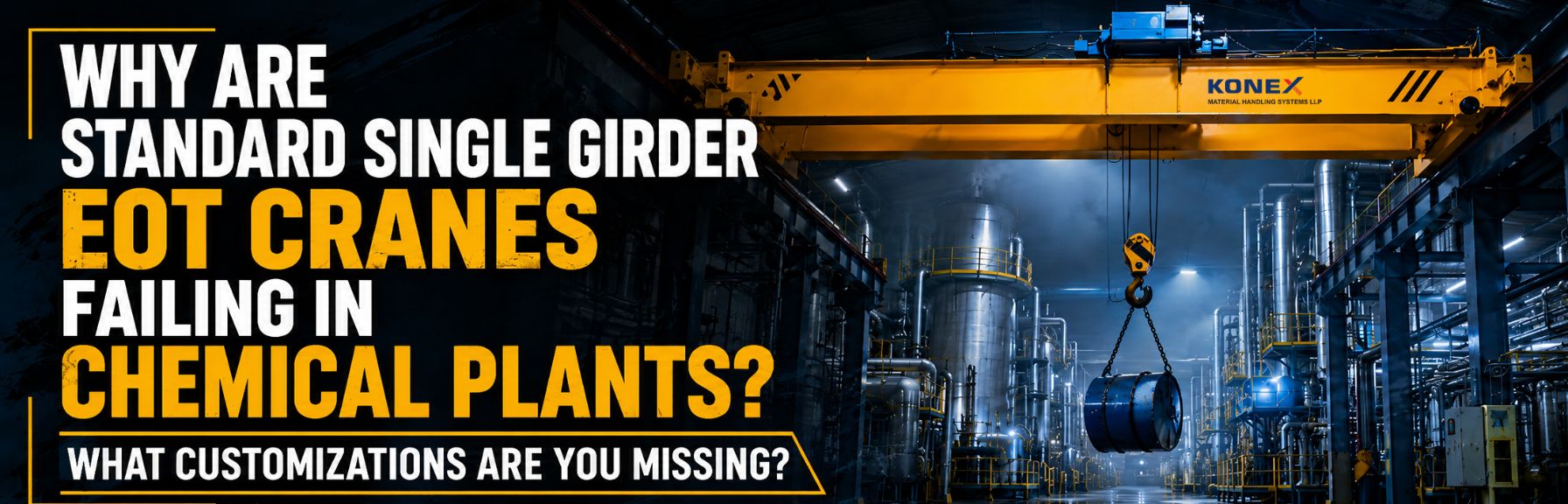
Why Are Standard Single Girder EOT Cranes Failing in Chemical Plants? What Customizations Are You Missing?
Imagine this scenario: Your chemical processing facility in India is running at peak capacity. Orders are lined up, and timely dispatch is crucial to maintaining your market reputation. Suddenly, the overhead crane handling your raw materials or finished chemical drums grinds to a halt.
Upon inspection, you find that the wire rope has corroded prematurely, the electrical control panels have shorted out due to acidic fumes, or the structural integrity of the girder has been compromised by chemical exposure.
This isn’t an isolated incident. It is a frequent, expensive reality for chemical manufacturers who install off-the-shelf material handling systems.
If your plant is struggling with frequent crane breakdowns, high maintenance costs, or safety concerns, the culprit is highly likely a standard Single Girder EOT Crane that was never designed to survive a chemical environment.
In this comprehensive guide, we will explore why standard material handling systems fail in chemical processing zones, what custom features you are missing, and how choosing the right Single Girder EOT Crane for Chemical Plant environments can transform your operational efficiency, safety, and bottom line.
The Chemical Plant Dilemma: Standard Equipment in an Extraordinary Environment
Every industrial facility needs reliable material handling. In India’s rapidly growing chemical, pharmaceutical, and agrochemical sectors, overhead cranes are the unsung heroes of daily operations. They transport hazardous raw materials, load reactors, position heavy process equipment, and move finished products.
However, a chemical plant is one of the most hostile environments for mechanical and electrical machinery.
When procurement teams source a standard Single Girder EOT Crane India, they often look at three primary variables: lift capacity, span, and price. While this formula works perfectly for clean, dry environments like warehouse logistics or general fabrication shops, it is a recipe for disaster in a chemical plant.
A standard crane is designed for atmospheric conditions that do not contain corrosive fumes, explosive gases, extreme moisture, or abrasive dust particles. When exposed to these elements, standard structural steel, conventional paints, non-sealed electrical components, and standard hoisting mechanisms degrade rapidly.
The result? Unplanned downtime, skyrocketing spare parts costs, safety hazards, and a significantly shortened equipment lifespan.
Why Standard Single Girder EOT Cranes Fail in Chemical Plants
To solve a problem, we must first understand its root causes. Here is why standard, non-customized overhead cranes fail so frequently in chemical processing environments:
1. Acidic and Alkaline Atmospheric Corrosion
Chemical plants are filled with airborne vapors, moisture, and corrosive gases (such as chlorine, ammonia, sulfur dioxide, or hydrochloric acid). Standard cranes are coated with basic industrial primers and synthetic paints. Within months, these vapors eat through the paint layer, exposing the structural steel of your Single Girder EOT Crane.
Once rust sets in, it compromises the structural integrity of the main girder, end carriages, and hoisting unit. This is not just a maintenance issue; it is a major structural safety hazard.
2. Micro-Explosion Risks and Dust Ignition
Many chemical processes involve flammable liquids, volatile organic compounds (VOCs), or combustible dust. Standard electrical motors, limit switches, and control panels generate tiny sparks during normal operations. In a volatile environment, a single tiny spark from a crane’s contactor can trigger a catastrophic dust ignition or gas explosion. Standard cranes lack the necessary flameproof or explosion-proof enclosures required to isolate these electrical sparks from the surrounding atmosphere.
3. Electrical Component Breakdown
Fumes don’t just corrode steel; they are highly destructive to copper wiring, circuit boards, and electrical connections. In standard overhead cranes, electrical panels (IP54 or lower) are not airtight. Acidic fumes enter the control panel, corroding contactors, variable frequency drives (VFDs), and terminal blocks. This leads to intermittent electrical faults, sudden motor failures, and frequent control system burnouts.
4. Premature Wear of Hoisting Cables and Drums
The wire rope is the lifeline of any overhead crane. In a chemical plant, standard steel wire ropes attract moisture and chemical particles. Without specialized lubrication and material composition, these chemicals cause internal corrosion between the rope strands, making the cable brittle. This leads to microscopic cracking and sudden wire rope failures, placing your operators and expensive process equipment at extreme risk.
What Customizations Are You Missing?
If standard equipment cannot survive, what is the alternative? The answer lies in custom engineering.
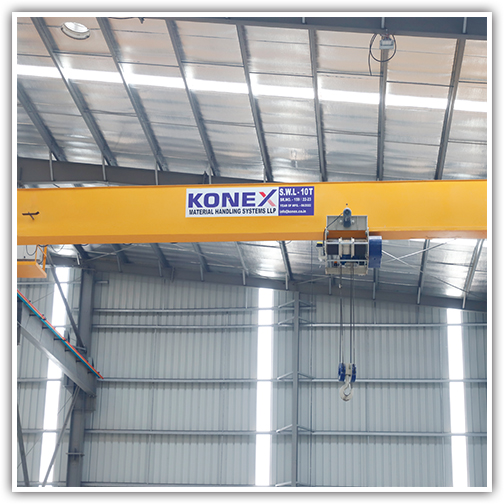
When you invest in a customized Single Girder EOT Crane for Chemical Plant use, you are not just buying a piece of lifting machinery. You are buying operational insurance, guaranteed safety, and peace of mind.
Here are the critical, high-value customizations that transform a standard crane into a chemically resilient, long-lasting asset:
1. Advanced Anti-Corrosive Coating Systems
Your first line of defense is the paint. Instead of standard industrial paint, customized cranes for chemical plants utilize high-performance epoxy or polyurethane coating systems.
- The steel is shot-blasted to pristine standards to remove all impurities.
- A zinc-rich primer is applied to prevent rust from spreading.
- Multiple layers of chemical-resistant epoxy paint are applied, followed by a durable polyurethane finish. This protective barrier shields the underlying steel from continuous exposure to moisture and aggressive chemical vapors.
2. High-Grade Stainless Steel Components (SS304/SS316)
For components that experience direct friction or are highly vulnerable to corrosion, standard carbon steel must be replaced with stainless steel. Customized cranes utilize stainless steel for:
- Wire rope drums and wire ropes (or specialized galvanized steel cables).
- Hook blocks and load hooks.
- Control panels and cable trays.
- Fasteners, bolts, and pins. By using stainless steel, you eliminate the risk of rust-induced binding, seizing, or structural degradation in critical load-bearing areas.
3. Flameproof and Explosion-Proof Electricals
If your chemical plant handles flammable solvents, gases, or powders, your crane must be flameproof. Customized EOT cranes feature:
- Flameproof motors and brake units.
- Explosion-proof limit switches and pendant controllers.
- Intrinsic safety barriers for remote control systems.
- Double-enclosed control panels that prevent volatile gases from coming into contact with electrical sparks.
4. Hermetically Sealed, Chemical-Resistant Panels (IP65 or IP66)
To protect sensitive electrical controls, standard panels are replaced with heavy-duty, stainless steel panels rated IP65 or IP66. These enclosures use chemical-resistant neoprene gaskets to form an airtight seal. This prevents toxic vapors and moisture from reaching the internal electrical components, drastically reducing unexpected electrical failures and extending the life of your control systems.
5. Protective Shrouds and Weather Covers
When a crane is idle or operating under process vessels, it is vulnerable to chemical splashes, rising steam, and dripping liquids. Customizing your crane with protective steel canopies or shrouds over the hoist motor, crab unit, and long-travel machinery prevents direct liquid contact, ensuring continuous operation.
The Real Cost of "Saving Money" on standard Cranes
Many procurement managers in chemical plants make the mistake of choosing a standard Single Girder EOT Crane India because of a lower upfront purchase price. However, looking only at the initial acquisition cost is a major financial oversight.
Let us look at the true cost of a cheap, standard crane over a 5-year period:
- The Cost of Downtime: If your crane breaks down during a critical process, your entire production line can halt. In the chemical industry, a few hours of downtime can cost hundreds of thousands of rupees in lost production, wasted raw materials, and missed delivery deadlines.
- Frequent Component Replacements: Standard wire ropes, electrical contactors, and motors fail repeatedly in chemical environments. The cost of buying replacement parts, hiring maintenance contractors, and managing emergency repairs quickly adds up to more than the original cost of the crane.
- Safety Risks and Regulatory Penalties: A crane failure carrying toxic, hot, or volatile chemicals can lead to catastrophic spills, worker injuries, or worse. The resulting regulatory fines, legal liabilities, and damage to your brand reputation are immeasurable.
By choosing a custom-engineered Single Girder EOT Crane, you may pay a slightly higher initial cost, but you virtually eliminate these hidden expenses. You get an asset that runs reliably, day after day, for decades.
How Konex Material Handling System LLP Redefines Reliability
When it comes to material handling in highly demanding environments, you need a partner who understands that no two chemical plants are identical.
At Konex Material Handling System LLP, we don’t believe in “one-size-fits-all” solutions. We are a premier manufacturer of material handling systems, specializing in custom-engineered overhead cranes designed specifically for the unique challenges of the chemical, pharmaceutical, and process industries.
Our Approach: Customization by Design
We begin every project by analyzing your specific operating environment.
- What specific chemicals are processed in your plant?
- What is the concentration of airborne fumes?
- Is there a risk of explosive gases or combustible dust?
- What are the moisture and temperature levels?
Based on this deep assessment, our engineering team designs a customized Single Girder EOT Crane for Chemical Plant applications that addresses your exact pain points. From anti-corrosive structures and stainless steel components to fully certified flameproof electrical assemblies, we customize every detail to guarantee longevity, absolute safety, and unmatched performance.
Indian Expertise, Global Standards
Based in India, Konex Material Handling System LLP combines world-class engineering capabilities with competitive manufacturing practices. We serve the domestic market with localized support and have robust global export capabilities, shipping high-performance custom cranes to chemical and manufacturing plants worldwide.
Whether you are upgrading an existing production line in Gujarat, setting up a new bulk drug plant in Andhra Pradesh, or establishing a chemical facility internationally, Konex is your trusted engineering partner.
Ready to Secure Your Operations? Take the Next Step with Konex
Continuing to run standard, uncustomized cranes in your chemical plant is a ticking financial and safety time bomb. Every breakdown is an avoidable drain on your profitability.
It is time to transition from constant firefighting to seamless, uninterrupted operations. Let our material handling experts help you design a crane that is built to endure, perform, and protect your workforce.
Get a Free Custom Consultation Today
Don’t wait for your next costly crane failure to take action. Contact the engineering experts at Konex Material Handling System LLP today.
Let’s discuss your plant’s specific chemical environment, lifting requirements, and operational goals. We will provide you with a customized, high-reliability proposal designed to maximize your plant’s uptime and safety.
Contact Konex Material Handling System LLP Today Partner with India’s leading custom material handling specialists and secure your operations for the future.
+91 9824011164 | +91 90999 02956
FAQs
Standard Single Girder EOT Cranes are designed for normal industrial environments, not for areas with corrosive chemicals, acidic fumes, high humidity, or explosive gases. These conditions can cause rapid corrosion, electrical failures, wire rope deterioration, and structural damage. A customized crane with anti-corrosion coatings, sealed electrical systems, and chemical-resistant components offers significantly better reliability and service life.
A chemical plant crane should include:
- Heavy-duty epoxy or polyurethane anti-corrosion coating
- SS304 or SS316 stainless steel components
- Flameproof or explosion-proof motors and electricals
- IP65/IP66 sealed control panels
- Chemical-resistant wiring and cable trays
- Protective covers for motors and hoists
- Corrosion-resistant wire ropes or galvanized ropes
These features improve equipment durability, operational safety, and maintenance efficiency.
Yes. Single Girder EOT Cranes can be customized with explosion-proof motors, flameproof control panels, intrinsically safe electrical systems, explosion-proof limit switches, and certified electrical components suitable for hazardous chemical processing zones where flammable gases or combustible dust are present.
Customized chemical-resistant cranes are commonly used in:
- Chemical manufacturing plants
- Pharmaceutical industries
- Fertilizer plants
- Petrochemical facilities
- Paint and coating industries
- Agrochemical production units
- Specialty chemical factories
- Acid and solvent processing plants
These industries require enhanced protection against corrosion and hazardous environments.
High-performance epoxy coating combined with polyurethane top coats is considered one of the best protective systems. These coatings resist acidic fumes, alkalis, moisture, and harsh industrial chemicals while extending the crane’s structural lifespan and reducing maintenance costs.
A customized crane minimizes corrosion, protects electrical systems, reduces wire rope wear, and prevents premature component failures. This results in:
- Less unplanned downtime
- Lower repair expenses
- Longer component life
- Reduced spare part replacement
- Higher production efficiency
Over the crane’s lifecycle, these savings often outweigh the higher initial investment.
A safe chemical plant crane should include:
- Overload protection
- Emergency stop system
- Flameproof electrical equipment
- Anti-corrosion structural design
- IP65/IP66 electrical enclosures
- Limit switches
- Reliable braking systems
- Certified hooks and wire ropes
- VFD controls for smooth lifting and travel
These features improve operator safety while meeting industrial safety standards.
Consider the following factors:
- Safe Working Load (SWL)
- Span and lifting height
- Type of chemicals handled
- Corrosive atmosphere level
- Explosion hazard classification
- Duty cycle
- Indoor or outdoor installation
- Environmental temperature and humidity
- Compliance with IS standards and safety regulations
A site inspection by an experienced crane manufacturer helps determine the ideal specifications.
Although customized cranes have a slightly higher initial cost, they deliver:
- Longer operational life
- Better corrosion resistance
- Improved workplace safety
- Lower maintenance expenses
- Reduced downtime
- Higher production reliability
- Better return on investment (ROI)
For harsh chemical environments, customized cranes provide far greater long-term value than standard industrial cranes.
Konex Material Handling System LLP designs and manufactures customized Single Girder EOT Cranes specifically for challenging industrial environments. Their solutions include corrosion-resistant structures, stainless steel components, explosion-proof electrical systems, IP-rated control panels, and application-specific engineering. Every crane is designed according to the customer’s operating conditions, ensuring maximum safety, reliability, performance, and long service life for chemical processing facilities.