

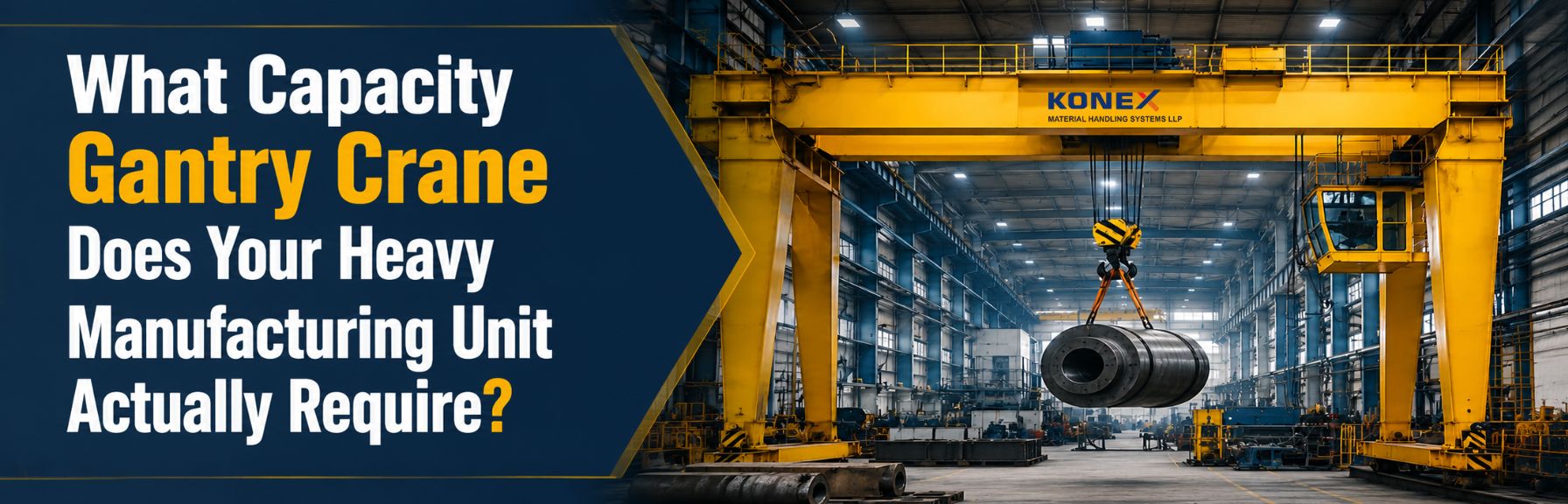
What Capacity Gantry Crane Does Your Heavy Manufacturing Unit Actually Require?
Heavy manufacturing industries depend on efficient material handling systems to maintain productivity, reduce downtime, and improve workplace safety. Whether you operate a fabrication plant, steel processing unit, engineering workshop, shipbuilding facility, infrastructure project, or heavy equipment manufacturing plant, selecting the right Gantry Crane capacity is one of the most important decisions you can make.
However, many industrial buyers face the same challenge:
“What capacity Gantry Crane does our manufacturing unit actually need?”
Choosing a crane that is too small can create safety risks, production delays, and equipment failures. On the other hand, selecting an oversized crane often results in unnecessary capital expenditure and higher maintenance costs.
This guide will help you understand the key factors involved in selecting the right Gantry Crane for your manufacturing operations, ensuring maximum efficiency, safety, and return on investment.
Why Capacity Selection Matters More Than Most Industrial Buyers Realize
A Gantry Crane is not simply a lifting machine. It becomes a critical part of your production workflow.
The right crane capacity directly impacts:
- Material handling efficiency
- Production speed
- Worker safety
- Equipment lifespan
- Operating costs
- Future scalability
- Overall plant productivity
Many businesses focus only on current lifting requirements. However, smart manufacturers consider both present and future operational demands before investing in a crane system.
As an experienced Gantry Crane Manufacturer, Konex Material Handling System LLP regularly helps industries avoid costly mistakes by selecting crane solutions that align with long-term business growth.
Understanding Your Actual Lifting Requirements
Before determining the ideal Gantry Crane capacity, it is essential to evaluate what your facility lifts every day.
Ask yourself:
What Are You Lifting?
Different industries handle different loads:
- Steel plates and coils
- Fabricated structures
- Heavy machinery components
- Moulds and dies
- Construction materials
- Precast concrete products
- Industrial equipment
- Large assemblies
The nature of your load significantly influences the crane capacity required.
For example, a fabrication unit handling structural steel may require a completely different solution compared to an engineering company lifting machinery components.
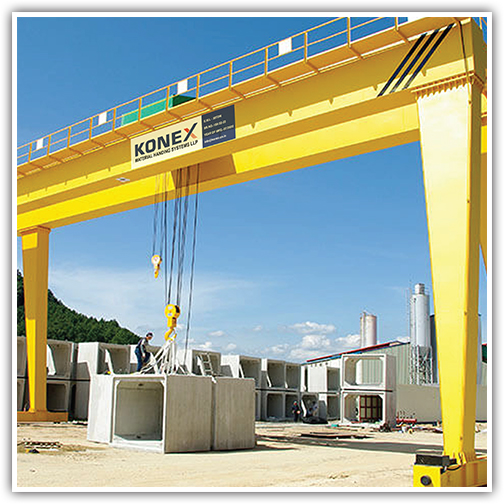
Consider Your Heaviest Load—Not Your Average Load
One of the biggest mistakes industrial buyers make is calculating crane capacity based on average loads.
Instead, capacity planning should focus on:
Maximum Load Weight
If your facility occasionally lifts exceptionally heavy components, your crane must safely accommodate those loads.
A good rule is to account for:
- The heaviest item lifted
- Additional lifting accessories
- Operational safety margins
- Future production requirements
This ensures your Gantry Crane remains reliable even during peak operational demands.
Future Expansion Should Influence Today's Purchase
Manufacturing businesses rarely remain static.
Production increases.
Projects become larger.
Customer requirements evolve.
Equipment sizes grow.
Many companies purchase a crane suitable only for their current workload and discover two or three years later that it no longer meets operational needs.
When selecting a Gantry Crane, consider:
- Future product expansion
- Increased production volumes
- New manufacturing capabilities
- Larger material handling requirements
- Long-term business growth
A forward-thinking investment today can prevent expensive upgrades tomorrow.
How Industry Type Affects Gantry Crane Capacity
Different industries have unique lifting challenges.
Steel Manufacturing Industry
Steel plants often handle:
- Coils
- Billets
- Structural sections
- Fabricated assemblies
These operations typically demand robust lifting solutions capable of handling repetitive heavy loads.
Engineering and Fabrication Units
Engineering companies frequently move:
- Heavy machine parts
- Fabricated structures
- Equipment assemblies
- Industrial components
The crane capacity required depends on the size and complexity of manufactured products.
Infrastructure and Construction Projects
Construction-related industries often require a Gantry Crane for:
- Precast concrete components
- Bridge sections
- Heavy construction materials
- Structural assemblies
In these environments, lifting reliability becomes a major operational priority.
Shipbuilding and Marine Industries
Shipyards handle extremely large structures and heavy components throughout the production process.
For such industries, crane selection requires careful planning to support large-scale manufacturing operations.
The Hidden Cost of Choosing a Smaller Gantry Crane
Many buyers attempt to reduce initial investment by selecting lower-capacity cranes.
Unfortunately, this often creates operational challenges such as:
Reduced Productivity
Operators spend more time managing loads and arranging multiple lifts.
Increased Safety Risks
Working near maximum lifting limits repeatedly can increase operational stress.
Higher Maintenance Costs
Continuous heavy-duty usage can accelerate wear and tear.
Production Bottlenecks
Material movement delays can affect entire production schedules.
Investing in the right capacity from the beginning often delivers better long-term value.
Why Oversized Gantry Cranes Are Not Always Better
Some buyers take the opposite approach and purchase a significantly larger crane than required.
While this may seem safer, it can create issues such as:
- Higher capital expenditure
- Increased operating costs
- More complex maintenance requirements
- Reduced return on investment
- Inefficient utilization of equipment
The goal is not to buy the biggest crane.
The goal is to buy the right crane.
An experienced heavy duty gantry crane manufacturer can help determine the optimal solution based on actual operational needs.
Evaluate Your Working Environment
The operating environment plays a major role in crane selection.
Important considerations include:
Indoor Manufacturing Facilities
Indoor operations require smooth material flow and efficient space utilization.
Outdoor Industrial Yards
Outdoor cranes must withstand changing weather conditions and demanding working environments.
Infrastructure Projects
Project sites often require flexibility and mobility for material handling operations.
Coastal and Marine Locations
Special environmental considerations may apply where humidity and corrosion exposure are significant factors.
A trusted industrial gantry crane supplier evaluates these operational conditions before recommending a suitable crane solution.
How Production Frequency Impacts Crane Capacity Decisions
Another critical factor is usage frequency.
Ask these questions:
- How many lifts occur daily?
- How many shifts operate each day?
- Is lifting continuous or occasional?
- Does production run throughout the year?
A crane handling loads throughout multiple shifts requires a different approach compared to one used only periodically.
High-frequency operations demand solutions designed for long-term reliability and consistent performance.
Why Safety Should Drive Every Capacity Decision
Industrial accidents can result in:
- Equipment damage
- Production losses
- Worker injuries
- Compliance issues
- Financial liabilities
Selecting the correct Gantry Crane capacity helps maintain safer lifting operations across your facility.
When evaluating a crane supplier, look for a company that prioritizes:
- Engineering quality
- Operational safety
- Manufacturing standards
- Reliability testing
- After-sales support
A professional Gantry Crane Manufacturer focuses on both productivity and safety.
The Importance of Consulting an Experienced Gantry Crane Manufacturer
Many industrial buyers assume crane selection is simply about choosing a load rating.
In reality, successful projects require a detailed understanding of:
- Manufacturing workflows
- Production requirements
- Material handling patterns
- Facility layout
- Future expansion plans
- Industry-specific challenges
This is why working with an experienced Gantry Crane Manufacturer is essential.
Professional consultation helps ensure:
- Correct crane selection
- Better operational efficiency
- Reduced downtime
- Improved safety
- Higher long-term ROI
Why Manufacturers Across India Choose Konex Material Handling System LLP
At Konex Material Handling System LLP, we understand that every manufacturing facility has unique lifting requirements.
As a trusted Gantry Crane Manufacturer serving industries across India and international markets, we provide customized material handling solutions designed to improve productivity, safety, and operational efficiency.
Our team works closely with industrial clients to understand:
- Production processes
- Material flow requirements
- Operational challenges
- Expansion plans
- Industry-specific demands
This consultative approach allows us to recommend the most suitable crane solution for long-term performance and business growth.
Whether you operate a fabrication facility, engineering unit, infrastructure project, steel processing plant, manufacturing workshop, or heavy industrial operation, our expertise helps you make informed investment decisions.
Final Thoughts: Choosing the Right Gantry Crane Capacity Is a Strategic Business Decision
Selecting the ideal Gantry Crane capacity is about much more than lifting weight.
It is about creating a safer, more productive, and more profitable manufacturing environment.
The right decision helps:
- Improve operational efficiency
- Reduce downtime
- Enhance workplace safety
- Support future growth
- Maximize return on investment
Before investing in your next crane system, take the time to evaluate your actual lifting requirements, production goals, and long-term expansion plans.
If you’re looking for an experienced Gantry Crane Manufacturer, reliable gantry crane suppliers, or a trusted industrial gantry crane supplier capable of delivering customized lifting solutions for demanding industrial applications, Konex Material Handling System LLP is ready to help.
Need Expert Guidance for Your Manufacturing Facility?
Talk to the crane specialists at Konex Material Handling System LLP today.
Our team will help you identify the most suitable Gantry Crane solution based on your operational requirements, production goals, and future expansion plans—ensuring you invest in the right equipment from day one.
Contact us : info@konex.co.in , +91 98240 11164 | +91 90999 02956
FAQs
The right Gantry Crane capacity depends on the heaviest load you need to lift, lifting frequency, future production plans, and operational requirements. It is recommended to choose a crane that can safely handle your maximum load while allowing room for business growth.
An undersized Gantry Crane can lead to operational delays, increased equipment wear, safety risks, reduced productivity, and potential lifting failures. Selecting the correct capacity helps ensure efficient and safe material handling.
While planning for future expansion is important, purchasing an excessively large Gantry Crane can increase investment, maintenance, and operating costs. A properly sized crane offers the best balance between performance and cost-effectiveness.
Gantry Cranes are widely used in steel plants, fabrication workshops, engineering industries, shipyards, warehouses, infrastructure projects, precast concrete manufacturing units, power plants, and heavy manufacturing facilities.
Facilities with high production volumes and frequent lifting operations typically require a more robust Gantry Crane solution to ensure reliability, efficiency, and uninterrupted material handling throughout daily operations.
Manufacturing requirements often increase over time. Choosing a Gantry Crane that supports future production expansion can help avoid costly equipment upgrades and operational disruptions later.
Yes. Gantry Cranes are suitable for both indoor and outdoor material handling applications. The crane design and configuration can be customized based on the working environment and operational requirements.
Key factors include load weight, lifting frequency, operational area, material handling requirements, future expansion plans, safety considerations, and choosing an experienced Gantry Crane Manufacturer.
An experienced Gantry Crane Manufacturer can assess your operational needs, recommend the right solution, improve lifting efficiency, enhance safety, and provide reliable after-sales support for long-term performance
Konex Material Handling System LLP provides customized Gantry Crane solutions based on your industry, lifting requirements, production goals, and future expansion plans. Our experts help businesses select the most suitable crane system to maximize productivity, safety, and return on investment.