

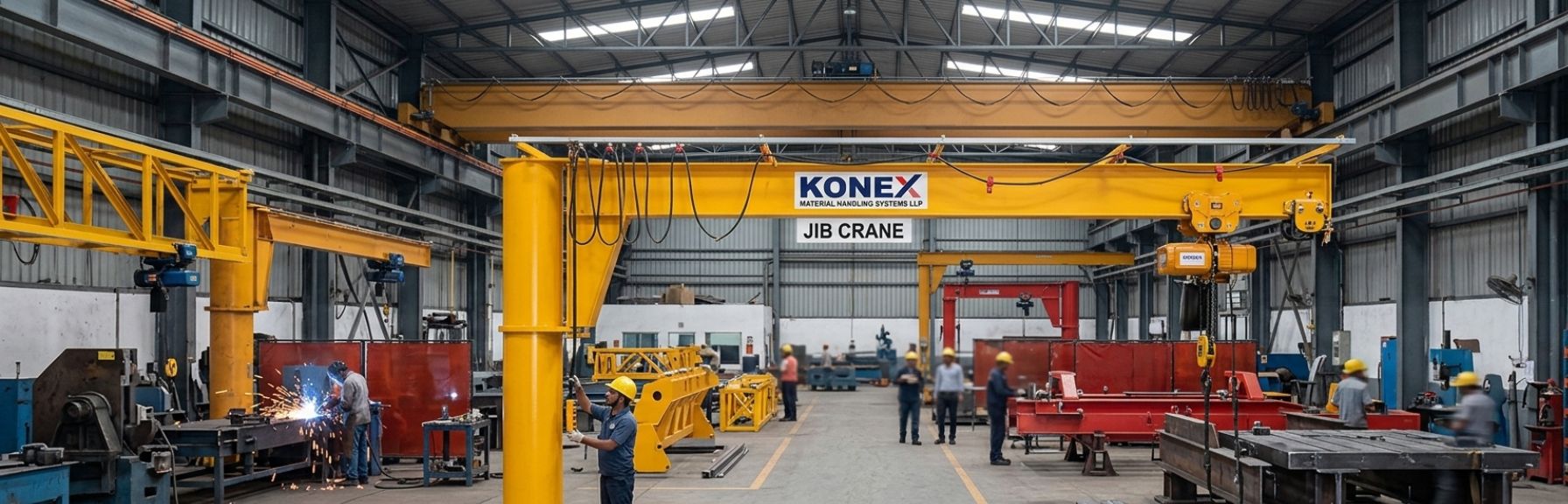
The Engineer’s Guide to Selecting the Best Floor-Mounted JIB Cranes
Material handling is the backbone of any efficient manufacturing facility. When it comes to localized lifting, positioning, and manoeuvring heavy loads, Floor-Mounted JIB Cranes are unparalleled in their performance. Whether you are outfitting a new machining centre or upgrading an assembly line, choosing the right JIB Cranes can drastically improve workflow, enhance operator safety, and reduce downtime.
However, specifying the correct crane involves more than just picking a weight capacity. As an industrial buyer or facility engineer, you must evaluate structural constraints, reach, hoist configurations, and safety standards.
In this comprehensive guide, we will walk you through everything you need to know to select the perfect floor-mounted system, how to identify reliable jib crane manufacturers, and why Konex Material Handling System LLP is the trusted choice for jib cranes India.
What is a Floor-Mounted JIB Crane?
A floor-mounted jib crane (also known as a free-standing jib crane) is a type of industrial lifting equipment featuring a horizontal boom (jib) attached to a vertical mast. The mast is securely anchored directly to a reinforced concrete floor. This design allows the crane to support heavy loads and offer a full 360-degree rotation without relying on the building’s walls or support columns.
Key Components of a Floor-Mounted Jib Crane:
- Mast (Pillar): The robust vertical steel pipe or column that supports the entire structure.
- Boom (Arm): The horizontal I-beam or track where the load moves back and forth.
- Hoist and Trolley: The lifting mechanism that travels along the boom to lift and position materials.
- Rotation Mechanism: Bearings at the top and bottom of the mast that allow the boom to swing (manually or via motor).
- Base Plate/Foundation: The heavy-duty anchoring system bolted or poured into the concrete floor.
Why Engineers Prefer Floor-Mounted JIB Cranes
When comparing lifting solutions, a jib crane mounted to the floor offers several distinct engineering advantages:
- True 360-Degree Rotation: Unlike wall-mounted alternatives which are limited to 180 or 200 degrees, floor-mounted units can swing in a complete circle, maximizing the working radius.
- Zero Building Dependency: Because they are self-supporting, they do not stress your facility’s walls or columns. This makes them ideal for open-plan factories.
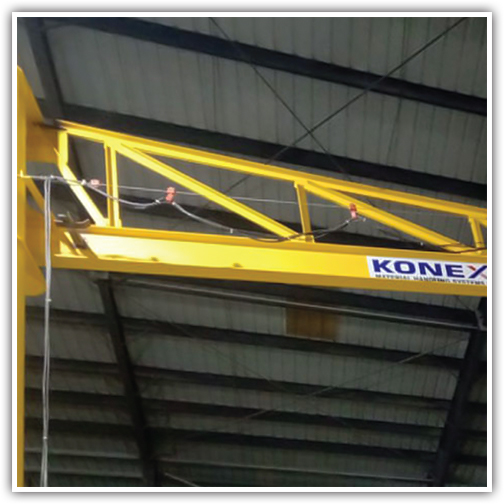
6 Critical Factors for Selecting the Right JIB Crane
To ensure you get the most efficient, durable, and safe crane for your facility, carefully evaluate the following technical specifications.
1. Working Load Limit (Capacity)
The first step is determining the maximum weight the crane will need to lift. However, from an engineering standpoint, the capacity is not just the weight of the load itself.
- Calculation: You must account for the heaviest load + the weight of the hoist and trolley + an impact allowance (typically 15% to 25% of the capacity).
- Pro Tip: Always specify a working load limit slightly higher than your heaviest anticipated load to prevent equipment strain and ensure long-term safety.
2. Span (Outreach) and Working Radius
The span is the total length of the boom. But more importantly, you need to calculate the working span—the actual distance the hoist trolley can travel along the arm.
- Remember that the trolley cannot travel to the absolute edge of the boom due to end stops.
- Ensure the working radius covers your required workstations without creating obstacles in pedestrian aisles or forklift paths.
3. Height Under Boom (HUB) and Overall Height
Height constraints are crucial.
- HUB (Height Under Boom): This is the distance from the floor to the underside of the horizontal boom. To calculate the required HUB, add the height of your load, the maximum lifting distance required, and the headroom taken up by the hoist and attachments.
- Overall Height: This is the distance from the floor to the absolute highest point of the crane. Ensure this clears your ceiling, lighting fixtures, and any overhead gantry cranes.
4. Rotation Requirements
Will your application require manual or motorized rotation?
- Manual Rotation: Ideal for lighter loads and shorter spans where an operator can easily push the boom.
- Motorized Rotation: Essential for heavy loads (usually above 2 tons) or large spans. Motorized rotation ensures smooth, controlled movements, reducing operator fatigue and increasing precision.
5. Foundation and Installation Specs
Because Floor-Mounted JIB Cranes bear the entire overturning moment at the base, the foundation is the most critical safety element. You generally have three foundation mounting options:
- Base-Plate Mounted: The mast is bolted to a pre-existing or newly poured reinforced concrete foundation. It is the easiest to install.
- Foundation/Insert Mounted: A steel sleeve is welded to a base plate and anchored during a concrete pour. The mast is then inserted into the sleeve.
- Sleeve-Insert Mounted: Similar to insert mounting but designed to allow the crane to be easily relocated in the future without damaging the mast.
- Note: Always consult with a structural engineer to ensure your concrete floor meets the manufacturer’s depth and strength requirements.
6. Power Supply and Safety Features
Determine how power will be routed to the hoist and motorized rotation unit (top entry vs. bottom entry). Furthermore, ensure your manufacturer includes standard safety devices such as:
- Overload limit switches
- Emergency stop systems
- Anti-collision sensors (if operating near other cranes)
- High-quality electromagnetic or hydraulic brakes
Industrial Applications of a JIB Crane
Floor-mounted designs are incredibly adaptable. You will typically find them deployed in:
- Machining Centers: Loading and unloading heavy metal components into CNC machines or lathes.
- Assembly Lines: Assisting workers with repetitive lifting tasks, dramatically improving ergonomics and reducing workplace injuries.
- Maintenance Bays: Lifting engines, heavy motors, or industrial equipment for repair.
- Outdoor Loading Yards: When properly weatherized with anti-corrosion paint and IP-rated electrical components, they are excellent for loading trucks or handling materials outdoors.
Finding Reliable JIB Crane Manufacturers in India
India has a rapidly growing manufacturing sector, making the demand for high-quality material handling equipment higher than ever. When searching for jib crane manufacturers in the country, do not make your decision based on price alone.
Look for suppliers who offer:
- Customization: No two factory floors are identical. The best manufacturers engineer customized spans, heights, and lifting capacities.
- IS/ISO Compliance: Ensure the cranes are designed according to rigorous Indian Standards (IS 3177, IS 807) and international safety codes.
- In-House Testing: The manufacturer should conduct thorough load testing, structural integrity checks, and electrical evaluations before dispatch.
- Robust After-Sales Support: Lifting equipment requires routine maintenance, Annual Maintenance Contracts (AMCs), and quick access to spare parts.
If you are looking for top-tier jib cranes India, partnering with a proven local expert is the smartest business decision you can make.
Why Choose Konex Material Handling System LLP?
Headquartered in Ahmedabad, Gujarat, Konex Material Handling System LLP is recognized as a premier innovator and leader in the Indian crane industry. With over two decades of engineering expertise.
What Sets Konex Apart?
- Engineering Excellence: Konex designs robust, heavy-duty Floor-Mounted JIB Cranes that guarantee stability, minimal deflection, and long-term sustainability.
- Tailored Solutions: Whether you need a (ADD) manual crane for a small workstation or a (ADD) motorized crane for a massive fabrication unit, Konex engineers build to your exact facility dimensions and application needs.
- Uncompromising Safety: Every Konex crane is equipped with premium safety features, including rotational limit switches, heavy-duty braking systems, and overload protection.
- End-to-End Service: From initial structural consultation and design to expert installation and dedicated AMC support, Konex acts as a partner in your long-term operational success.
- Premium Components: Konex utilizes only reputed, standardized mechanical and electrical components to ensure maximum uptime and reliability.
Upgrade Your Lifting Operations Today
Selecting the right material handling equipment is a critical investment that directly impacts your facility’s productivity, safety, and bottom line. By carefully evaluating capacity, span, height, and foundation requirements, you can specify a floor-mounted system that perfectly aligns with your operational goals.
When you are ready to invest in world-class equipment, trust the experts.
Ready to enhance your facility’s productivity with the best jib cranes in the market? Contact Konex Material Handling System LLP today. Our team of experienced engineers is ready to provide you with a customized design consultation and a competitive quote for your next floor-mounted jib crane project.
Contact Us : +91 9824011164 | +91 90999 02956
FAQs
A floor-mounted JIB crane, or free-standing JIB crane, is a self-supporting lifting system consisting of a vertical mast anchored to a reinforced concrete floor and a horizontal rotating boom. Unlike wall-mounted cranes, these provide a full 360-degree rotation and do not require support from the building’s structural columns.
The system comprises five primary components:
- Mast (Pillar): The vertical steel column providing structural support.
- Boom (Arm): The horizontal beam where the load travels.
- Hoist & Trolley: The mechanism that performs the actual lifting and lateral movement.
- Rotation Mechanism: Bearings that allow the boom to swing manually or via a motor.
- Base Plate: The heavy-duty anchoring system used to secure the crane to the foundation.
To determine the Working Load Limit (WLL), you must calculate the weight of your heaviest load plus the weight of the hoist and trolley. Engineers typically add an impact allowance of 15% to 25% to the total weight to account for dynamic forces and ensure long-term safety.
The Span refers to the total physical length of the horizontal boom. The Working Radius (or working span) is the actual distance the hoist can travel. Because of end stops at the tip and the mast connection, the trolley cannot reach the absolute edges of the boom.
The HUB is the distance from the floor to the underside of the crane arm. To calculate your required HUB, add together:
- The height of the load being lifted.
- The maximum lifting height required (e.g., onto a CNC machine).
- The headroom required by the hoist and any below-the-hook attachments.
Manual rotation is generally sufficient for lighter loads and shorter spans where an operator can easily move the boom. Motorized rotation is recommended for capacities exceeding 2 tons or for very long spans to ensure precision, reduce operator fatigue, and maintain controlled movement.
Since the crane is self-supporting, the foundation must handle the entire overturning moment. Options include:
- Base-Plate Mounted: Bolted to a reinforced concrete pad.
- Foundation/Insert Mounted: The mast is secured into a steel sleeve during the concrete pour.
- Sleeve-Insert: Allows for future relocation without destroying the mast.
- Note: Always consult a structural engineer to verify floor depth and concrete strength.
High-quality industrial cranes should be equipped with:
- Overload limit switches to prevent lifting beyond capacity.
- Emergency stop systems for immediate shutdown.
- Rotational limit switches to prevent the boom from hitting obstacles.
- Electromagnetic or hydraulic brakes for secure positioning.
These cranes are highly versatile and found in:
- Machining Centers: For loading/unloading CNC machines.
- Assembly Lines: For ergonomic repetitive lifting.
- Maintenance Bays: For repairing heavy motors and engines.
- Outdoor Yards: When equipped with anti-corrosion paint and IP-rated electronics.
Konex Material Handling System LLP, based in Ahmedabad, is a premier manufacturer in India. With over 20 years of experience and + completed projects, they provide IS/ISO-compliant, customized lifting solutions for industries ranging from steel manufacturing to power generation.