

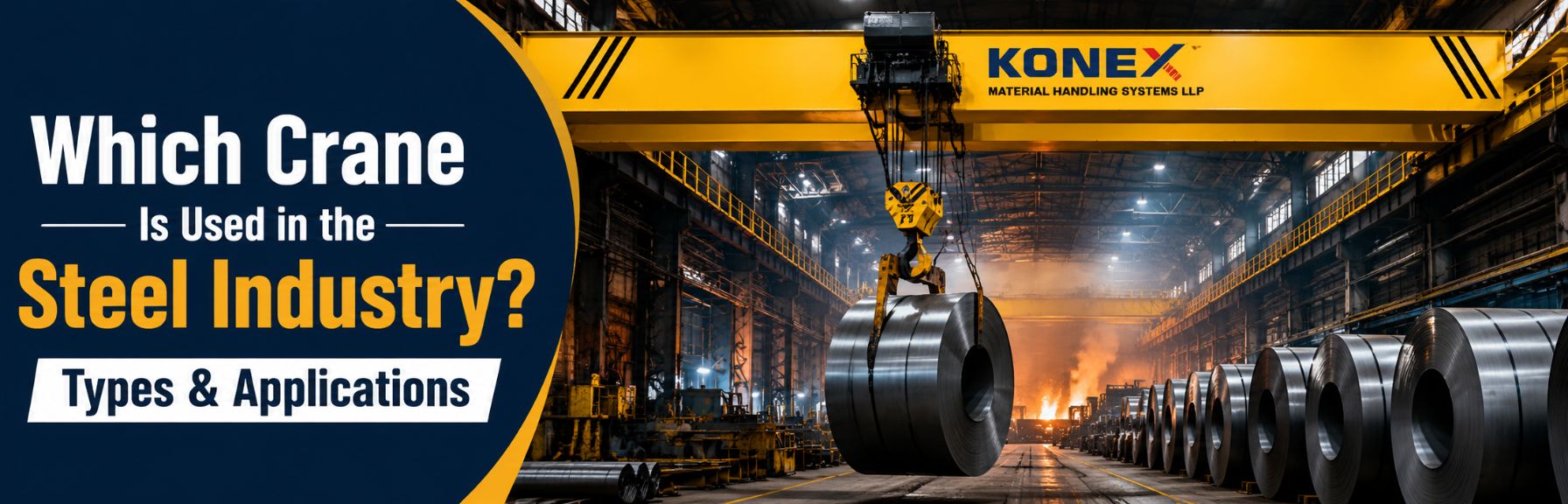
Which Type of Crane is used in the Steel Industry?
If you are setting up a new steel manufacturing facility, expanding a rolling mill, or replacing aging overhead equipment, choosing the right material handling system is one of the most critical decisions you will make.
Steel plants operate under some of the most unforgiving working conditions in modern manufacturing. Intense radiant heat from furnaces, airborne metallic dust, 24/7 continuous operations, and immense load weights ranging from liquid steel ladles to 40-ton hot-rolled coils mean there is zero margin for equipment failure. A single unexpected crane breakdown can freeze an entire production line, creating costly bottlenecks and serious workplace safety hazards.
If you are asking “Which crane is used in the steel industry?”, the straightforward answer is: Double Girder Overhead (EOT) Cranes are the primary heavy-duty workhorse inside steel plant buildings, complemented by Gantry Cranes for outdoor stockyards, Jib Cranes for workstation repairs, and Motorized Transfer Trolleys for heavy floor-level movement.
In this detailed buying and application guide, we break down the exact types of industrial cranes used across different steel mill departments, how to match them to your workflow, and key technical factors to evaluate so you get maximum operational efficiency and long-term durability.
The Main Types of Cranes Used in Steel Manufacturing
No single crane type can handle every stage of steel processing. A well-designed facility places specific crane structures in dedicated zones based on lift capacity, operational speed, and environmental conditions.
1. Double Girder EOT Cranes (The Steel Mill Workhorse)
When dealing with heavy tonnage, high ambient heat, and non-stop continuous shifts, Double Girder EOT Cranes are the ultimate industry standard.
Unlike single-beam models, double girder cranes feature two heavy-duty box girders spanning the plant width. The hoist crab travels on top of rails fitted to these girders. This structural configuration provides superior hook clearance, maximum usable headroom, and unmatched stability under heavy swing loads.
- Typical Load Capacity: 5 Tons up to 100+ Tons.
- Why Steel Plants Depend on Them:
- Solid structural frame that resists swaying during fast acceleration and deceleration.
- Can be outfitted with dual hoists (a main hoist for heavy lifting and an auxiliary hoist for tilting liquid ladles or turning coils).
- Spacious crab platform allows easy mounting of thermal heat shields, insulated cabs, and dual fail-safe brakes.
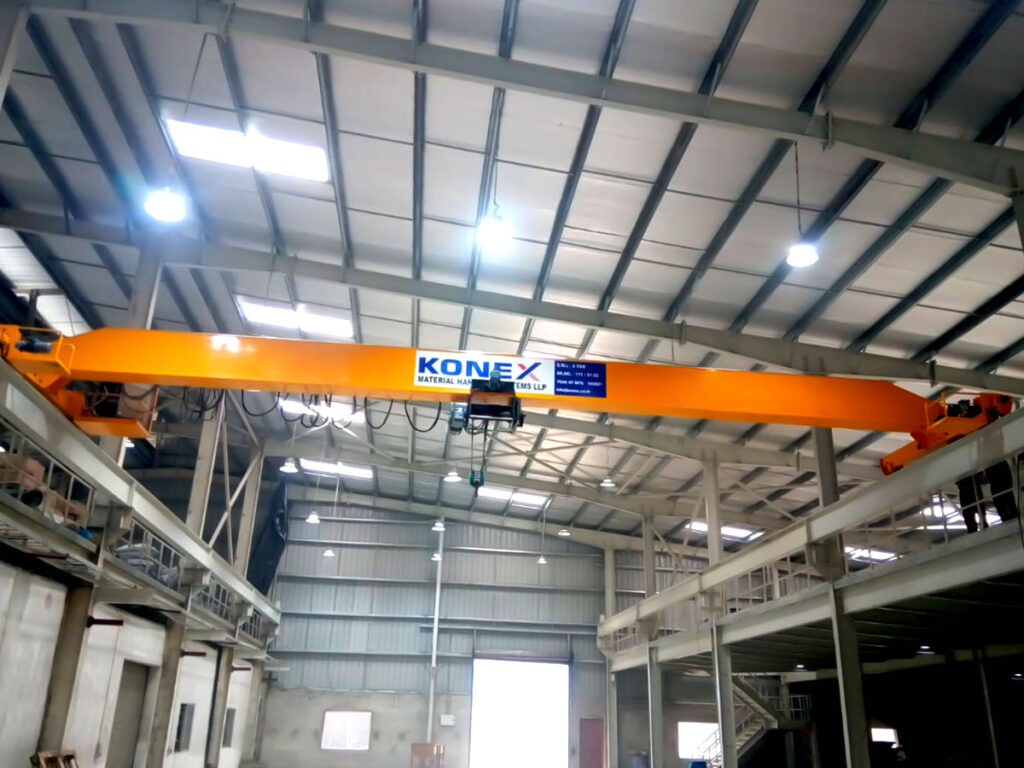
2. Single Girder EOT Cranes (For Supporting Bays & Machine Shops)
While double girder cranes rule the hot metal and main rolling bays, Single Girder EOT Cranes carry out essential support operations in auxiliary departments.
Featuring a single main cross beam supported by end trucks, these cranes are lightweight, compact, and budget-friendly. They are perfect for areas where lifting demands are lower and headroom space is constrained.
- Typical Load Capacity: 1 Ton to 15 Tons.
- Best Used For:
- Mechanical maintenance workshops and roll grinding shops.
- Storing spare parts, motors, and plant tooling.
- Light fabrication and machine assembly shops inside the mill complex.
3. Gantry & Goliath Cranes (Outdoor Scrap & Storage Yards)
Inside the factory building, cranes run on elevated gantry rails attached to building columns. However, in outdoor storage yards where there are no overhead building structures, Gantry & Goliath Cranes are the ideal solution.
Gantry cranes stand on self-supporting structural legs that travel along floor-mounted ground rails. They are engineered to endure weather exposure while handling continuous high-volume material loading.
- Key Configurations: Single Girder, Double Girder, and Semi-Gantry (where one side rests on a wall column and the other runs on floor rails).
- Best Used For:
- Raw metal scrap yards equipped with heavy electro-magnets or orange-peel grab buckets.
- Billet, bloom, and slab yard storage.
- Loading finished products (pipes, structural steel, sheets) onto trucks and railway wagons.
4. Jib Cranes (Dedicated Workstation Lifting)
To keep production lines running without delays, your main overhead cranes should not be tied up doing small, routine lifting tasks. Jib Cranes deliver localized lifting power right where individual operators need it.
Featuring a rotating horizontal boom mounted on a heavy pillar or building column, a jib crane offers 180° to 360° rotation within a fixed workspace radius.
- Typical Load Capacity:5 Tons to 5 Tons.
- Best Used For:
- Loading steel stock into CNC cutting machines or shears.
- Preparing mold boxes in foundry sections.
- Fast tool changes and localized equipment repairs.
5. Wire Rope Electric Hoists (The Core Lifting Engine)
Every overhead or gantry crane relies on its lifting mechanism to move loads safely. High-performance Wire Rope Electric Hoists provide smooth vertical power and precise speed control required in sensitive steel plant operations.
Built with high-tensile steel wire ropes, hardened alloy gearboxes, and heavy-duty disc brakes, quality wire rope hoists prevent dangerous sudden jerks while handling delicate or high-value steel products.
6. Industrial Transfer Trolleys (Safe Cross-Bay Ground Transport)
Lifting items high above the plant floor is the job of a crane, but moving heavy steel coils, dies, or hot billets across neighboring factory bays horizontally is often safer on the ground. Industrial Transfer Trolleys are heavy-duty motorized flatbed carts that run on floor rails or steerable rubber wheels.
Using transfer trolleys reduces overhead crane traffic, eliminates overhead blind spots, and provides a safe, controlled method for moving 10-ton to 50-ton loads across bays without waiting for an available crane hook.
Steel Plant Application Guide: Which Crane Goes Where?
To help procurement teams and plant managers map out material handling equipment across a steel manufacturing layout, here is a practical operational guide:
Steel Plant Zone / Process | Best Crane System | Crucial Attachment or Feature | Primary Operational Advantage |
Scrap Handling Yard | Double Girder Gantry Crane | Heavy Duty Scrap Magnet / Grab | Rapid raw material sorting & unloading |
Furnace & Melting Shop | Heavy Duty Double Girder EOT Crane | Heat Shield, Double Brakes, Ladle Hooks | Safe handling of molten liquid steel |
Continuous Casting Bay | Double Girder EOT Crane | Auxiliary Hoist, VFD Precision Speed | Smooth positioning of molds & hot billets |
Rolling Mill & Billet Yard | Double Girder EOT / Gantry Crane | C-Hooks, Motorized Tongs, Spreader Bar | Efficient movement of hot slabs & billets |
Finished Goods Storage | Semi-Gantry or Double Girder EOT | Vacuum Lifters, Webbing Slings, C-Hooks | Damage-free loading of coils, plates & pipes |
Machine Shop & Spares | Single Girder EOT or Jib Crane | Electric Wire Rope Hoist | Fast tool changing and repair support |
How to Select the Right Crane for Your Steel Mill
Buying an overhead crane for a steel facility is fundamentally different from purchasing a crane for a general warehouse. Selecting an under-engineered crane leads to frequent motor burnouts, structural metal fatigue, safety hazards, and costly downtime.
Here are four crucial technical factors every buyer must verify before selecting a crane manufacturer:
- Duty Cycle Rating (IS 3177 & FEM Standards)
Steel manufacturing demands cranes that can operate almost continuously under heavy loads. Standard light-duty commercial cranes (Class 1 or Class 2) will fail rapidly in this environment. Always specify Heavy Duty (Class 3 / M5) or Extra Heavy Duty (Class 4 / M7 / M8) duty ratings to ensure gearboxes, bearings, and structural girders handle decades of repetitive stress.
- Thermal Shielding and Dust Proofing
In melting and casting bays, radiant heat levels near furnaces can reach extreme temperatures. Steel mill cranes require:
- Thermal insulation shields beneath the main bridge girders.
- High-temperature resistant electrical cabling and Class H insulated hoist motors.
- IP65-rated dust-tight electrical enclosures to prevent short circuits caused by conductive airborne iron dust.
- Redundant Safety Controls
Handling molten liquid metal or multi-ton steel coils allows zero room for mistake. Demand key safety features including:
- Dual Emergency Brakes: A primary service brake plus an independent fail-safe emergency brake acting directly on the rope drum.
- Overload Protection: Automated cutoff switches that prevent lifts beyond the rated Safe Working Load (SWL).
- Anti-Sway Inverter Drives: Variable Frequency Drives (VFD) for ultra-smooth acceleration and deceleration, preventing dangerous swinging of suspended loads.
- Custom Below-the-Hook Lifting Gear
Standard crane hooks are often slow or impractical for finished steel products. Enhance workplace safety and speed with specialized attachments:
- C-Hooks: Specifically designed for fast, damage-free horizontal coil handling.
- Lifting Electro-Magnets: Ideal for moving bundles of rebar, steel plates, and raw scrap without manual rigging.
- Slab Tongs: Mechanical gripping jaws engineered for safe high-temperature slab transport.
The Hidden Cost of Low-Spec Cranes
When evaluating crane quotes, it is tempting to focus solely on the initial purchase price. However, in heavy steel manufacturing, the real cost of a crane lies in its operational reliability over 15 to 20 years.
A lower-grade crane might save initial capital expenditure, but frequent gear failures, burnt hoist motors, or structural deflection can cost tens of thousands of dollars in lost production every single hour the line is down. Investing in a robust, custom-engineered crane system guarantees smooth production flow, lower maintenance expense, and maximum workplace safety for your team.
Why Leading Steel Producers Work with Konex
Building high-performance material handling equipment requires deep structural engineering experience, top-tier manufacturing precision, and dependable local service support.
At Konex Material Handling Systems LLP, we design and manufacture custom industrial cranes tailored specifically for demanding industrial environments across India and international markets.
- Customized Engineering: Capacity options from 5 Tons to 100+ Tons built to match your precise building dimensions and workflow requirements.
- Full Standard Compliance: All cranes strictly comply with national and international quality standards, including Indian Standards IS 3177 / IS 807 and FEM guidelines.
- Built for Endurance: Fabricated using computer-optimized box girders, forged alloy steel wheels, and low-maintenance drive assemblies.
- Turnkey Support: From initial site layout and GA drawing approvals to complete erection, load testing, and fast spare parts availability.
Whether you are constructing a new steel mill or upgrading legacy cranes in your existing plant, our experienced engineering team in Ahmedabad, India is ready to assist you.
Get Your Custom Technical & Commercial Proposal
Do not compromise your plant’s safety and production capacity with generic lifting equipment. Contact our material handling specialists today to discuss your bay spans, lifting capacities, and plant requirements.
FAQs
The most commonly used crane in the steel industry is the Double Girder EOT (Electric Overhead Traveling) Crane. It is designed to handle heavy loads, continuous operations, high temperatures, steel coils, billets, slabs, and molten metal safely within steel plants.
Double Girder EOT Cranes offer higher lifting capacities, greater stability, better hook approach, increased headroom, and the ability to operate reliably in demanding steel manufacturing environments. They are ideal for heavy-duty and continuous-duty applications.
Steel plants typically use Ladle Cranes, a specialized type of Double Girder EOT Crane, for handling molten steel. These cranes are equipped with heat shields, dual braking systems, overload protection, and advanced safety features to ensure safe ladle transportation.
Yes. Single Girder EOT Cranes are commonly used in steel plant workshops, maintenance bays, spare parts stores, fabrication sections, and machine shops where lifting requirements are lower, generally up to 15 tons.
Gantry Cranes and Goliath Cranes are the preferred solutions for outdoor steel yards. They are widely used for handling steel scrap, billets, slabs, finished products, and truck loading operations where overhead building support structures are unavailable.
Steel industry cranes often use specialized lifting attachments such as:
- C-Hooks for steel coils
- Electro Magnets for scrap and steel plates
- Grab Buckets for scrap handling
- Slab Tongs for hot slabs
- Spreader Beams for long steel products
These attachments improve safety, productivity, and material handling efficiency.
The required crane capacity depends on the application. Steel plants commonly use cranes ranging from 5 tons to over 100 tons. Heavy-duty melting shops, rolling mills, and casting bays often require capacities above 50 tons.
Industrial cranes reduce manual handling, speed up material movement, minimize downtime, improve workplace safety, and ensure continuous production flow. Efficient crane systems help steel plants achieve higher output with lower operational costs.
A steel plant crane should include:
- Dual braking systems
- Overload protection devices
- Anti-sway technology
- Emergency stop controls
- Limit switches
- VFD-controlled movements
- Heat-resistant electrical components
- Dust-proof enclosures
These features help prevent accidents and equipment failures.
Steel industry cranes should comply with recognized standards such as:
- IS 3177
- IS 807
- FEM Standards
- ISO Guidelines
- Factory Safety Regulations
Compliance ensures safe operation, durability, and long-term performance.
A properly designed and maintained steel plant crane can operate efficiently for 15 to 25 years or more. Regular inspections, preventive maintenance, genuine spare parts, and proper duty classification significantly increase service life.
Choose a crane manufacturer with proven experience in steel industry applications, custom engineering capabilities, compliance with IS and FEM standards, strong after-sales support, spare parts availability, and successful installations in steel mills and heavy industries.