

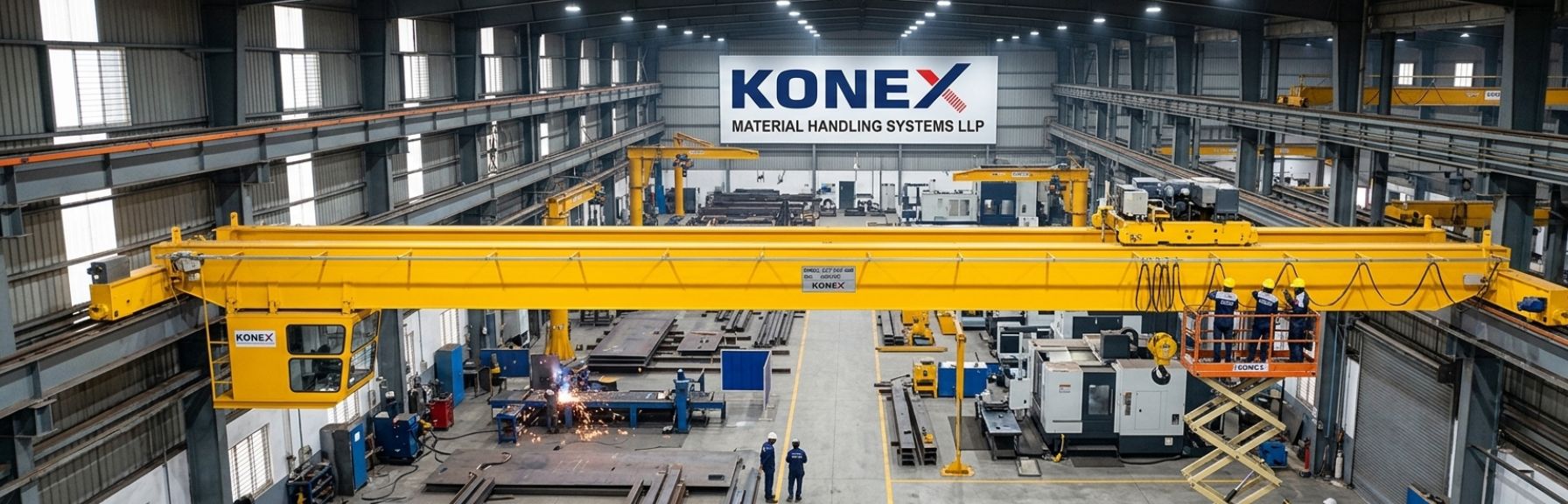
7 Proven Ways to Extend the Lifespan of Your Industrial EOT Crane
In the heart of any bustling industrial facility, downtime is the ultimate enemy. When production halts, profitability plummets. At the center of this intricate operational ballet is your EOT Crane (Electric Overhead Travelling Crane). As the backbone of heavy material handling, these massive machines are expected to perform flawlessly, day in and day out, under grueling conditions.
But what happens when an EOT crane fails prematurely? Beyond the immediate repair costs, you face stalled production lines, delayed shipments, and potential safety hazards.
Whether you are operating a nimble Single Girder EOT Crane in a medium-sized manufacturing workshop or a heavy-duty Double Girder EOT Crane in a demanding steel plant, maximising the lifecycle of your lifting equipment is a critical financial imperative.
At Konex Material Handling System, we don’t just build cranes; we engineer long-term productivity solutions. As a trusted EOT Crane Manufacturer, we have seen firsthand how proactive care can add decades to a crane’s operational life.
In this comprehensive guide, we will explore seven highly effective, actionable strategies to extend the lifespan of your industrial EOT crane, ensuring optimal performance, enhanced safety, and a maximum return on your investment.
Why Proactive EOT Crane Maintenance is Non-Negotiable
Before diving into the “how,” it is vital to understand the “why.” Industrial cranes are subjected to immense mechanical stress, continuous vibration, and often, harsh environmental conditions.
Waiting for a component to break before fixing it—known as reactive maintenance—is a costly gamble. A single snapped wire rope or a burnt-out hoist motor can halt your entire assembly line. Conversely, a proactive approach ensures:
- Predictable Budgets: Planned maintenance costs a fraction of emergency repairs.
- Heightened Safety: Regular checks prevent catastrophic failures that endanger human lives.
- Regulatory Compliance: Well-maintained cranes easily pass strict local and international safety audits.
- Enhanced Productivity: Smooth-running equipment operates faster and more accurately.
Here are seven ways you can ensure your overhead crane serves your facility reliably for years to come.
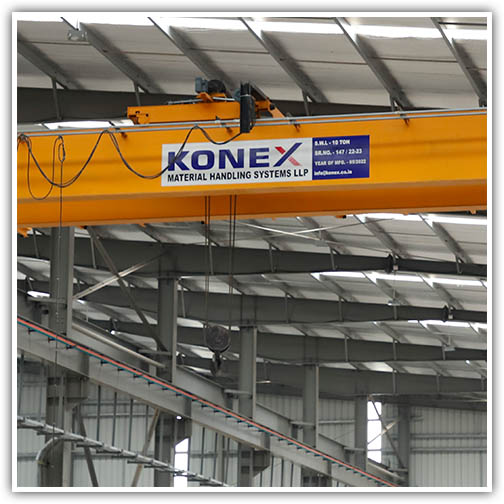
1. Strictly Adhere to Safe Working Load (SWL) Capacities
The absolute fastest way to destroy an EOT Crane is by consistently pushing it beyond its engineered limits. Every crane is designed with a specific Safe Working Load (SWL).
Overloading your crane causes severe metal fatigue in the bridge girders, accelerates wear on the hoist brakes, and puts dangerous tension on the wire ropes. Even if an overload doesn’t cause immediate structural failure, the micro-stresses accumulate, drastically reducing the machine’s lifespan.
- Actionable Tip: Ensure load weights are accurately calculated before lifting. Install load cells and digital displays to give operators real-time weight feedback. If your facility’s lifting requirements have increased over the years, do not force your current crane to adapt. Instead, consult with an expert to upgrade to a higher-capacity Double Girder EOT Crane designed for heavier, more frequent duty cycles.
2. Implement a Rigorous, Multi-Tiered Inspection Schedule
An EOT crane is a complex assembly of mechanical, structural, and electrical systems. A surface-level glance is not enough to determine its health. To truly extend its lifespan, you must implement a multi-tiered inspection protocol:
- Daily Pre-Shift Inspections: Before operations begin, operators should perform a quick visual and auditory check. This includes testing the upper and lower limit switches, checking the functionality of the pendant or remote control, listening for unusual grinding noises in the hoist, and ensuring brakes engage smoothly.
- Monthly/Quarterly Mechanical Audits: Maintenance engineers should inspect wire ropes for fraying, check hooks for deformation, and examine the runway rails for alignment issues.
- Annual Comprehensive Inspections: This should be conducted by certified third-party professionals or the original equipment manufacturer. This deep dive includes structural non-destructive testing (NDT), electrical panel checks, and precise alignment calibrations.
3. Prioritize Proactive and Precise Lubrication
Friction is the silent killer of mechanical components. An industrial crane possesses numerous moving parts—gears, bearings, wire ropes, and wheels—that require consistent lubrication to operate smoothly.
Without proper lubrication, metal grinds against metal, generating excessive heat and causing rapid degradation. However, over-lubrication can be just as damaging as under-lubrication, as excess grease can attract industrial dust and debris, creating an abrasive paste that wears down components.
- Actionable Tip: Follow the manufacturer’s exact specifications regarding the type of lubricant to use and the frequency of application. Pay special attention to the wire rope; it requires a penetrating lubricant that protects the inner core from rust while reducing friction between the individual strands.
4. Invest in Comprehensive Operator Training
Human error accounts for a significant percentage of premature crane failures. Even the most robust, high-quality crane will suffer if it is operated aggressively.
Common operating mistakes that damage cranes include:
- Side-Pulling: Using the hoist to drag a load horizontally across the floor before lifting. This damages the wire rope guide, frays the rope, and puts severe lateral stress on the crane structure.
- Plugging/Shock Loading: Suddenly reversing the direction of the crane without letting it come to a full stop, or snatching a heavy load abruptly from the ground. This shocks the mechanical systems and damages the gearboxes.
- Riding the Brakes: Improper use of controls that wears out brake pads prematurely.
- Actionable Tip: Standardize mandatory training and refresher courses for all crane operators. When operators understand the mechanical consequences of bad habits, they take greater ownership of the equipment’s health.
5. Replace Worn-Out Components Promptly
In industrial machinery, the “domino effect” is a very real phenomenon. Allowing a crane to operate with a slightly worn component puts additional stress on adjacent parts, causing a chain reaction of wear and tear.
For instance, if a runway wheel bearing begins to fail, the wheel may not track perfectly straight. This misalignment forces the bridge to skew, which grinds the wheel flanges against the rail, ultimately damaging both the wheels and the runway structure. What should have been a simple bearing replacement turns into a massive structural repair.
- Actionable Tip: Keep critical spare parts in stock. Monitor items with finite lifespans closely—such as brake linings, contactors, wire ropes, and push-button pendants—and replace them the moment they show signs of critical wear. Don’t wait for total failure.
6. Upgrade and Modernize Outdated Systems
If you are operating an older crane, you don’t necessarily need to replace the entire mechanical structure to extend its life. Upgrading its electrical and control systems can breathe new life into the equipment and drastically reduce mechanical wear.
- Install Variable Frequency Drives (VFDs): Traditional single-speed contactor controls cause abrupt, jerky movements when starting and stopping. Upgrading to VFD panels allows for smooth, gradual acceleration and deceleration. This eliminates “shock loading,” reducing wear on the motors, gearboxes, and structural steel by up to 50%.
- Radio Remote Controls: Replacing wired pendants with radio remote controls allows the operator to stand at a safer distance, providing a better vantage point of the load and reducing the likelihood of accidental collisions.
7. Maintain a Clean and Regulated Operating Environment
The environment in which your crane operates dictates how fast it will degrade. High humidity, corrosive chemicals, abrasive dust, and extreme heat will attack the crane’s structure and electrical systems.
While you cannot always change the nature of your industrial process, you can protect the crane:
- In Dusty Environments (Cement/Foundries): Ensure all electrical enclosures have appropriate IP (Ingress Protection) ratings. Keep the runway rails clear of debris buildup, which can cause the crane wheels to skid or wear unevenly.
- In Humid/Corrosive Environments (Chemical Plants/Ports): Invest in advanced anti-corrosive epoxy paints. Regularly clean off chemical residue. Use galvanised wire ropes and stainless steel electrical enclosures to fight off rust.
Partnering with the Right Manufacturer: The Konex Advantage
Implementing a maintenance strategy is much easier when you start with world-class equipment. To truly maximise the lifespan of your material handling systems, you need a partner that prioritises engineering excellence from the very first blueprint.
Enter Konex Material Handling System.
As a premier EOT Crane Manufacturer, we are dedicated to engineering robust, intelligent, and highly durable lifting solutions. From agile, space-saving Single Girder EOT Cranes to monumental Double Girder EOT Cranes designed for continuous, heavy-duty cycles, every Konex crane is built with longevity in mind.
Why Industries Choose Konex:
- Engineered for Endurance: We utilise high-grade steel, premium gearboxes, and state-of-the-art electrical components to ensure our cranes easily withstand the rigours of your industry.
- Advanced Technology Integration: Our cranes come standard with modern features like VFD controls, precision load monitors, and advanced safety limits to minimise mechanical shock and prevent operator error.
- Unmatched After-Sales Support: We believe our job begins—not ends—when the crane is installed. We provide comprehensive operator training, rigorous maintenance schedules, and ready availability of genuine spare parts.
- Proudly Made in India, Trusted Globally: Headquartered in India, Konex pairs world-class manufacturing standards with competitive pricing. Furthermore, our robust global export capabilities mean that no matter where your facility is located on the map, Konex can deliver, install, and support your material handling infrastructure.
Whether you are looking to purchase a new EOT Crane India and abroad, or you need expert consultation on maintaining and upgrading your existing fleet, Konex is your definitive industrial partner.
Final Thoughts
Your EOT crane is a massive investment, and it deserves a proactive maintenance culture. By strictly adhering to load capacities, enforcing rigorous inspection routines, prioritizing proper lubrication, training operators, and modernizing outdated controls, you can significantly extend the lifespan of your crane.
Remember, a well-maintained crane doesn’t just save you money on repairs—it guarantees the safety of your workforce and ensures your production targets are met without interruption.
Are you looking to upgrade your facility’s lifting capabilities, or need expert advice on crane maintenance?
Contact Us : +91 9824011164 | +91 90999 02956
FAQs
The average lifespan of an industrial EOT crane is typically 20 to 30 years, depending on usage frequency, load conditions, maintenance quality, and operating environment. With proper preventive maintenance, many cranes can perform efficiently for even longer.
Regular maintenance helps detect wear and tear early, prevents sudden breakdowns, and ensures all mechanical and electrical components operate safely. Scheduled inspections, lubrication, and timely part replacement significantly increase crane service life.
Overloading puts excessive stress on the crane’s structure, wire ropes, hoist motor, and brakes. Repeated lifting beyond the Safe Working Load (SWL) can cause structural damage, reduce equipment lifespan, and increase safety risks.
An EOT crane should undergo daily visual checks, monthly preventive inspections, and annual detailed inspections by certified professionals. Frequent inspections help maintain safety, compliance, and long-term performance.
Key components to inspect include wire ropes, hooks, brakes, hoist motors, limit switches, runway rails, control panels, and bearings. These parts directly affect the crane’s lifting efficiency and safety.
Yes, trained operators can significantly improve crane lifespan. Proper handling prevents issues like shock loading, side pulling, and abrupt braking, which often cause premature wear of mechanical components.
Yes, upgrading outdated systems such as installing VFD controls, radio remote systems, and modern safety sensors can improve operational efficiency, reduce mechanical stress, and extend the crane’s usable life.
Industrial EOT cranes require manufacturer-recommended lubricants for gears, bearings, wire ropes, and moving assemblies. Proper lubrication reduces friction, prevents corrosion, and ensures smooth operation.
Components should be replaced as soon as they show signs of excessive wear, deformation, rust, or performance issues. Common replacement parts include wire ropes, brake linings, contactors, and electrical switches.
Konex Material Handling System is a trusted EOT crane manufacturer in India known for supplying durable single-girder and double girder cranes with advanced technology, reliable after-sales support, and global export capabilities.