

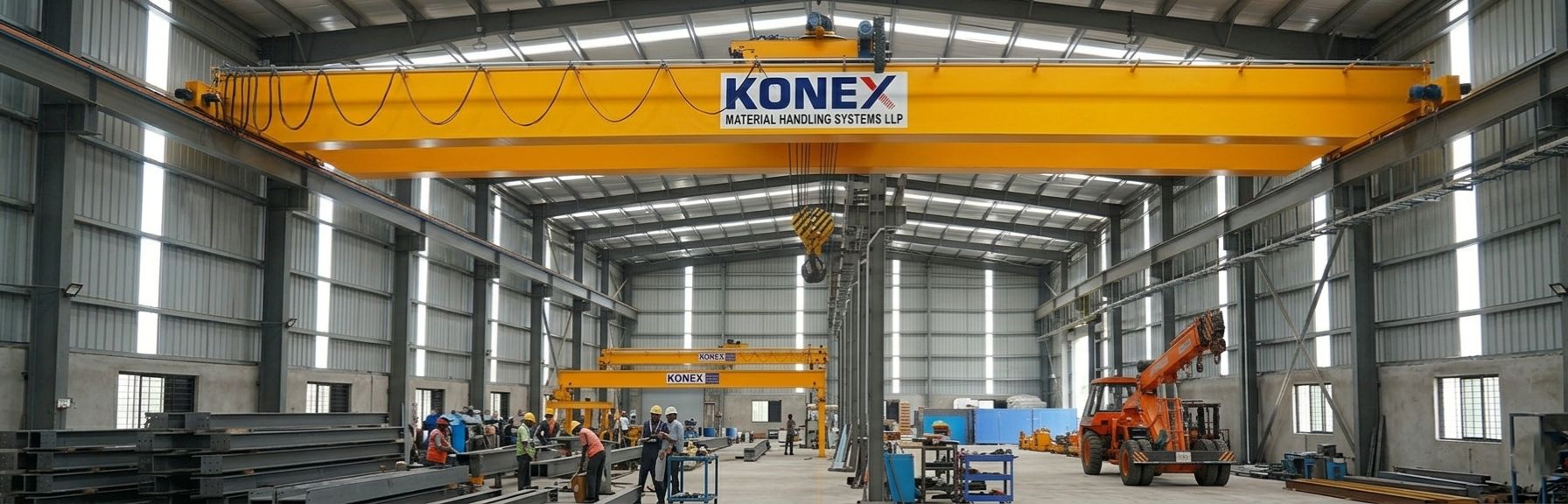
How to Ensure Double Girder EOT Crane Safety during Operation? – Regulation & Inspection
For factory owners, warehouse managers, and procurement heads, handling massive industrial loads is a demanding daily necessity. However, with heavy-duty lifting comes the immense responsibility of operational safety. A Double Girder EOT Crane (Electric Overhead Traveling Crane) is the undeniable backbone of heavy manufacturing, steel plants, and heavy engineering facilities, often tasked with lifting anywhere from 10 tons to well over 100 tons.
Because these massive machines operate high above the factory floor, carrying suspended, multi-ton loads, ensuring their safety during operation is not just a basic regulatory requirement—it is a critical necessity to protect human lives, prevent catastrophic structural damage, and avoid devastatingly expensive operational downtime.
If you are looking for actionable ways to bulletproof your facility’s lifting operations, this comprehensive guide covers everything from daily operator protocols and strict regulatory compliance to advanced inspection techniques. As a leading Double Girder EOT Crane Manufacturer, Konex Material Handling System LLP is committed to helping industries achieve zero-accident work environments through superior engineering, rigorous inspections, and robust safety standards.
The True Cost of Ignoring Crane Safety
Before diving into the technicalities of regulations and daily inspections, it is essential to understand why crane safety demands executive-level attention. Accidents involving a heavy-duty Double Girder EOT Crane rarely result in minor consequences.
When an overhead crane fails due to poor maintenance, continuous overloading, or operator error, the fallout includes:
- Fatalities and Severe Injuries: Dropped loads, swinging materials, or snapped wire ropes pose the highest, most lethal risk to floor workers.
- Massive Financial Loss: A damaged crane means halted production lines. The cost of downtime in a busy manufacturing plant often vastly exceeds the actual cost of crane repair.
- Legal and Compliance Penalties: Regulatory bodies impose severe, business-crippling fines on facilities that fail to maintain certified safety standards. You also risk losing your industrial insurance coverage.
- Reputational Damage: Industrial accidents heavily impact a company’s reputation, making it difficult to secure lucrative enterprise contracts, pass vendor audits, or retain skilled workers.
Investing proactively in preventive safety measures and partnering with a reliable EOT Crane Manufacturer ensures that your lifting equipment is designed with premium fail-safes from the ground up.
Key Safety Regulations for Double Girder EOT Cranes
Safety cannot be based on guesswork or “rule of thumb.” Global and regional regulatory authorities have established stringent, mathematically precise standards governing the design, operation, and maintenance of overhead cranes. Adhering to these is non-negotiable for any industrial setup.
1. Indian Standard (IS) Codes
For manufacturing facilities operating in India, the Bureau of Indian Standards (BIS) provides the ultimate regulatory framework.
- IS 3177: Code of practice for Electric Overhead Traveling cranes and gantry cranes other than steel work cranes. It dictates design parameters, duty cycles, safety margins, and structural integrity.
- IS 807: Code of practice for design, manufacture, erection, and testing (structural portion) of cranes and hoists.
- IS 3938: Specifications for electric wire rope hoists, outlining the exact requirements for hoisting mechanisms.
2. OSHA Regulations (The Global Benchmark)
The Occupational Safety and Health Administration (OSHA) sets the global benchmark for workplace safety.
- According to OSHA Standard 1910.179 for Overhead and Gantry Cranes, employers must strictly ensure that cranes are operated only by designated, competent personnel and undergo strict periodic inspections. It mandates strict regulations on load limits, hoist limit switches, and the structural integrity of the crane runway.
3. ASME Standards
The American Society of Mechanical Engineers (ASME B30.2) provides comprehensive, widely respected guidelines on the construction, installation, operation, inspection, and maintenance of overhead and gantry cranes.
Compliance with these standard codes is heavily dependent on the quality of the crane itself. Working with an expert Double Girder EOT Crane Manufacturer like Konex ensures that your equipment is engineered to meet and exceed these regulatory codes right out of the factory doors.
The Ultimate Pre-Operation Inspection Checklist
Featured Snippet Target: What is the daily inspection checklist for an EOT crane?
To ensure safe operation, a daily pre-shift inspection checklist for an EOT crane must include:
- Visual Walkaround: Inspect the crane bridge, runway, and floor area for loose debris, oil leaks, or physical obstructions.
- Pendant and Remote Controls: Check the push-button pendant for damage; ensure all buttons spring back smoothly.
- Wire Rope Health: Inspect for kinks, crushing, bird-caging, or broken wires.
- Hook Assembly: Verify the hook is not bent and the safety latch springs completely closed.
- Upper Limit Switch Test: Slowly raise the empty hook block to ensure the limit switch automatically cuts hoisting power.
- Brake Test: Lift a test load a few inches off the ground to verify hoist brakes engage immediately without drifting.
A vast majority of major crane accidents can be entirely prevented by executing this simple daily walkthrough. Crane operators must be trained to treat this checklist as mandatory before lifting a single load.
Best Practices During Double Girder EOT Crane Operation
Even with a perfectly engineered and maintained machine, human error remains a significant risk factor. Ensuring safety during operation requires strict, uncompromising adherence to operating protocols.
1. Never Exceed the Safe Working Load (SWL)
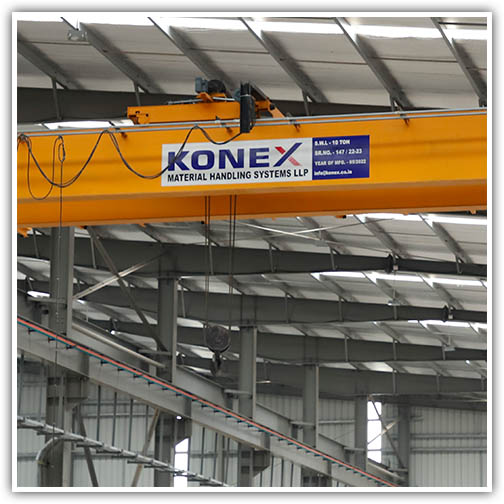
The SWL (or Rated Capacity) is prominently displayed in large lettering on the crane bridge. Operators must know the exact weight of the load being lifted before engaging the hoist. Overloading stresses the wire rope, stretches the hook, and bends the girders, inevitably leading to sudden, catastrophic failure.
2.Center the Hoist Before Lifting
A Double Girder EOT Crane is explicitly designed for vertical lifting only. Operators must align the hoist directly over the true center of gravity of the load.
- The Danger of Side Pulling: Pulling loads at an angle causes the wire rope to aggressively scrape against the drum grooves, destroys the rope guide, and creates a highly dangerous, uncontrollable pendulum swing when the load finally leaves the ground.
3. Avoid Sudden Reversals (Plugging)
Slamming a crane control from full-forward directly to full-reverse (known as plugging) creates a massive mechanical shock to the motors, gearboxes, and structural girders. Always allow the crane to come to a complete, natural stop before reversing direction.
4. Clear Communication and Standardized Hand Signals
In noisy, echoing factories, verbal communication is highly unreliable. Operators and riggers (the personnel attaching the load) must use standardized, internationally recognized hand signals to communicate complex movements. The operator must only take commands from one designated rigger, though they must immediately obey an “Emergency Stop” signal from anyone on the floor.
5. Never Move Loads Over People
This is a cardinal, unbreakable rule of overhead crane safety. Travel paths must be meticulously planned to avoid moving suspended loads over personnel. If a load must pass through a populated work zone, warning alarms must be sounded, and the entire area must be cleared of human traffic first.
The Crucial Role of Operator & Rigger Training
You can buy the safest crane in the world, but if the operator is unqualified, your facility is at risk.
To maximize safety, factory owners must invest in certified training programs for both operators and riggers.
- Operators must understand load dynamics, how to read load charts, and how to operate the specific make and model of the crane.
- Riggers must be expertly trained in calculating load weights, finding the center of gravity, and selecting the correct slings (chain, wire rope, or synthetic web) for the specific material being lifted. Improper rigging is just as dangerous as a faulty crane.
Comprehensive Maintenance & Inspection Strategies
To remain compliant with OSHA and IS regulations, and to maximize the ROI and lifespan of your heavy lifting equipment, facilities must implement a two-tiered inspection strategy.
1. Frequent Inspections (Daily to Monthly)
These are visual and operational assessments performed by the operator or in-house maintenance staff.
- Operating Mechanisms: Checking for smooth movements and unusual sounds (like grinding or squealing gears).
- Air/Hydraulic Systems: Checking for pressure leakage in lines or valves.
- Hoist Chains and Wire Ropes: Checking for excessive wear, twisting, or distortion.
- Electrical Apparatus: Inspecting limit switches, contactors, and push-button stations for signs of wear, dust buildup, or arcing.
2. Periodic Inspections (Quarterly to Annually)
Periodic inspections are thorough, deeply technical evaluations performed by certified crane inspectors or engineers from your EOT Crane Manufacturer.
- Structural Health: Checking girders, end carriages, and rails for deformed, cracked, or corroded metal members.
- Loose Connections: Checking all high-tensile bolts, rivets, and welded connections for structural integrity.
- Wear and Tear: Detailed caliper measurement of sheaves, drums, wheels, and bearings to ensure wear is within safe tolerances.
- Load Testing: Conducting a proof load test (usually lifting 125% of the SWL) to verify structural and mechanical stability.
Operating on a “fix-it-when-it-breaks” mentality is dangerous. Preventive maintenance schedules ensure that minor wear does not escalate into a multi-lakh mechanical failure.
Top 5 Causes of EOT Crane Accidents (And How to Prevent Them)
Understanding exactly how accidents happen is the first step in preventing them. Let’s look at the most common hazards associated with a Double Girder EOT Crane:
Hazard 1: Overloading
The Problem: Lifting materials heavier than the crane’s capacity causes immediate structural stress, snapping wire ropes. The Solution: Install electronic load monitoring systems. Modern load cells automatically cut power to the hoisting motor if an overload is detected.
Hazard 2: Improper Rigging causing Load Slips
The Problem: If a load is slung incorrectly, it can slip out of the harness mid-air, causing a dropped load. The Solution: Ensure all riggers undergo certified training. Use high-quality, frequently inspected slings and lifting beams.
Hazard 3: Two-Blocking
The Problem: “Two-blocking” occurs when the hook block is hoisted entirely up into the drum assembly. The massive force snaps the wire rope, causing the hook and load to free-fall. The Solution: Geared upper and lower limit switches are mandatory. A gravity limit switch acts as a secondary, fail-safe backup.
Hazard 4: Electrical Hazards
The Problem: Exposed wires, ungrounded pendants, or poor contact in the busbar system can cause fatal electrocution or erratic crane movements. The Solution: Regular maintenance of the festoon cable system and shrouded busbars. Ensure the whole system is properly grounded.
Hazard 5: Crane Collisions
The Problem: In bays where multiple cranes operate on the same runway, operators may accidentally crash them into one another. The Solution: Anti-collision devices (using infrared or laser sensors) automatically slow down and stop cranes before they make contact.
Modern Safety Technologies to Upgrade Your Crane
Technology in material handling has evolved rapidly. If you are procuring a new machine, partnering with a forward-thinking Double Girder EOT Crane Manufacturer allows you to integrate smart safety features:
- Variable Frequency Drives (VFD): VFDs control the speed of the motors, allowing for micro-speed adjustments. This eliminates jerky movements, prevents load swing, and reduces mechanical wear.
- Active Anti-Sway Systems: This advanced software calculates the pendulum effect of the load and automatically adjusts the crane’s travel speed to keep the load perfectly stable.
- Radio Remote Controls: Upgrading to a wireless radio remote allows the operator to control the crane from a safe distance, keeping them out of the “fall zone.”
- Warning Horns and Flashing Lights: These automatically activate when the crane is in motion, warning workers to clear the area.
Why Choose Konex as Your EOT Crane Manufacturer?
When it comes to handling heavy loads safely and ensuring maximum operational uptime, the quality of your equipment is your first and most important line of defense. As a premier Double Girder EOT Crane Manufacturer, Konex Material Handling System LLP engineers lifting solutions that prioritize safety, durability, and high-performance efficiency.
What sets Konex apart in the industry?
- Strict Global Standard Compliance: Every EOT Crane we manufacture undergoes rigorous testing to ensure it meets and exceeds strict IS, OSHA, and international safety protocols.
- Custom-Engineered Solutions: We don’t just sell cranes; we design customized industrial solutions. Whether you need high-temperature protection for a steel foundry or explosion-proof hoists for a chemical plant, we tailor the crane to your exact environmental hazards.
- Premium Safety Components: From heavy-duty gearboxes and fail-safe electro-hydraulic thruster brakes to IP-rated electrical panels, we utilize only the highest grade materials.
- Comprehensive Material Handling: Beyond overhead cranes, we offer a complete ecosystem of safe material movement. For floor-level heavy transit, explore our robustly engineered Transfer Trolleys, designed to seamlessly complement overhead lifting operations.
- After-Sales Support & AMC: Safety is an ongoing process. Konex provides expert installation, comprehensive operator training, and Annual Maintenance Contracts (AMC) to ensure your equipment remains in peak, inspection-ready condition year after year.
Make Safety Your Operational Priority
Operating a Double Girder EOT Crane safely requires a holistic approach—combining top-tier equipment, strict regulatory compliance, daily operator diligence, and uncompromising maintenance schedules. By understanding the regulations and executing thorough inspections, you protect your workforce, safeguard your assets, and ensure uninterrupted, profitable productivity.
Don’t compromise on your factory’s safety. Partner with an EOT Crane Manufacturer that understands the stakes and builds machines designed to protect your bottom line.
Ready to upgrade your material handling safety and boost productivity? Whether you need a new, custom-engineered Double Girder EOT Crane equipped with the latest VFD safety features, or require expert consultation for your existing factory setup, Konex is here to help.
Contact Konex Material Handling System LLP Today to discuss your lifting requirements with our expert engineering team and ensure your operations run flawlessly, efficiently, and most importantly—safely.
Contact Us : +91 9824011164 | +91 90999 02956
FAQs
A daily inspection checklist for a Double Girder EOT crane includes a visual walkaround, checking pendant controls, inspecting wire ropes for damage, verifying hook safety latch, testing limit switches, and performing brake tests. This routine helps prevent operational failures and ensures safe lifting.
Safety is critical because Double Girder EOT cranes handle heavy loads at height. Poor safety practices can lead to fatal accidents, equipment damage, legal penalties, and costly downtime. Proper safety ensures worker protection and uninterrupted operations.
The main safety regulations in India include IS 3177 (operation and maintenance), IS 807 (design and testing), and IS 3938 (wire rope hoists). These standards ensure structural safety, proper load handling, and compliance with industrial norms.
OSHA mandates that only trained operators should use overhead cranes, and equipment must undergo regular inspections. It also requires strict adherence to load limits, proper maintenance, and safe operating procedures to prevent accidents.
The Safe Working Load (SWL) is the maximum weight a crane can safely lift without risking structural damage or failure. Exceeding the SWL can cause wire rope breakage, hook deformation, or crane collapse.
The most common causes include overloading, improper rigging, two-blocking, electrical faults, and crane collisions. These risks can be minimized through proper training, regular inspections, and advanced safety systems.
EOT cranes should undergo daily (pre-operation), frequent (monthly), and periodic (quarterly or annual) inspections. Regular inspections help detect wear, prevent failures, and ensure compliance with safety standards.
Two-blocking occurs when the hook block collides with the hoist drum, causing excessive tension that can snap the wire rope. This can result in sudden load drops and serious accidents. Limit switches help prevent this issue.
Operators should never exceed load limits, avoid side pulling, ensure proper load centering, use standard hand signals, and never move loads over people. Following these practices reduces accidents and improves operational efficiency.
Modern technologies like Variable Frequency Drives (VFD), anti-sway systems, load monitoring sensors, and radio remote controls improve precision, reduce load swing, and enhance operator safety, leading to safer and more efficient crane operations.